
Why 3rd Party Logistics Matters for Growing Manufacturers
3rd party logistics is when a business hires an outside provider to manage work such as freight transportation, warehousing, inventory, order fulfillment, and returns. For a manufacturer moving CNC equipment, parts, or finished goods, the right 3PL can handle the physical complexity of getting products from the plant to the customer while your team stays focused on production and sales.
| Quick answer | What it means |
|---|---|
| What does a 3PL do? | Stores, moves, tracks, picks, packs, and ships products on a business's behalf. |
| Who should hire one? | Companies with growing shipping volume, limited warehouse space, complex freight needs, or customers spread across many regions. |
| Why use one? | To gain logistics expertise, carrier access, technology, and flexible capacity without building every capability in-house. |
| What should you watch for? | Service quality, equipment-handling experience, pricing terms, system integrations, and clear performance standards. |
Logistics is more than getting a box from point A to point B. For industrial businesses, it may involve scheduling a flatbed, securing oversized machinery, coordinating loading equipment, managing freight documents, and keeping customers informed when delivery plans change. A weak logistics partner can create costly delays and damage trust. A strong one becomes an extension of your operation.
I'm Jared Gray. With more than 12 years of experience buying, selling, brokering, and moving CNC manufacturing equipment, I understand how 3rd party logistics affects every stage of a machine transaction, from sourcing and inspection through removal and delivery. That practical perspective will help frame the decisions covered in this guide.
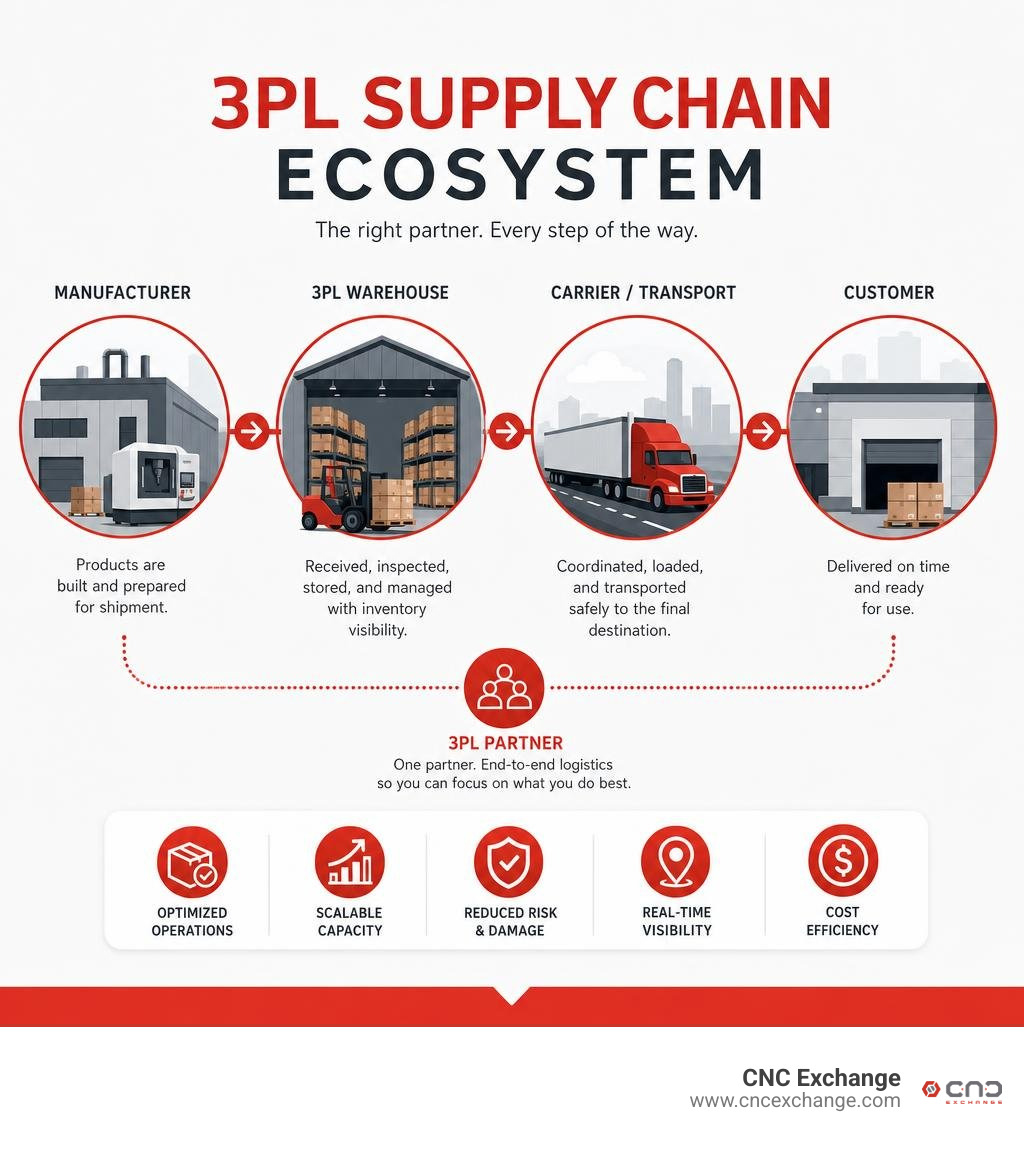
What Is 3rd Party Logistics and How Does It Work?
Logistics refers to the movement, storage, and overall flow of physical goods, services, and operational information within a supply chain. According to the official ASCM Supply Chain Dictionary, 3rd party logistics (often abbreviated as 3PL) represents a collaborative team structure between a buyer, a supplier, and an external provider that manages delivery, fulfillment, and distribution services.
At its core, a 3PL takes responsibility for the operational execution of physical distribution. Instead of a manufacturing company purchasing its own fleet of semi-trucks, building oversized distribution centers, hiring warehouse fulfillment staff, and managing freight claims internally, it outsources those specialized functions to experts. On average across 21 areas of supply chain management, 75% of shippers report that some level of third-party logistics support is ideal for their operations, while 82% rely on third-party providers to secure shipping capacity across various freight modes.

Core Services Offered by 3rd Party Logistics Providers
Modern 3rd party logistics entities offer a comprehensive portfolio of supply chain services customized to fit diverse commercial and industrial models:
- Inventory Management & Storage: Warehousing goods in strategically positioned facilities, providing real-time stock level reporting, and ensuring safety stock is available to handle sudden demand spikes.
- Cross-Docking: Unloading incoming freight directly from inbound trucks or rail cars and loading it straight into outbound vehicles with minimal or zero interim storage, drastically reducing handling costs.
- Pick-and-Pack Fulfillment: Selecting specific items from warehouse racks, packaging them according to customer specifications, labeling, and dispatching them through parcel or pallet networks.
- Reverse Logistics & Returns: Managing returned products, testing incoming goods, repackaging salable stock, and re-entering items into active inventory seamlessly.
- Specialized Heavy Machinery Handling: Moving heavy industrial assets like CNC mills, lathes, and metal fabrication machinery requires specialized equipment such as a dedicated Material Handling Institute Crane, overhead riggers, and heavy-duty rigging gear that standard fulfillment providers simply do not possess.
The Standard 6-Step Workflow From Factory to Customer
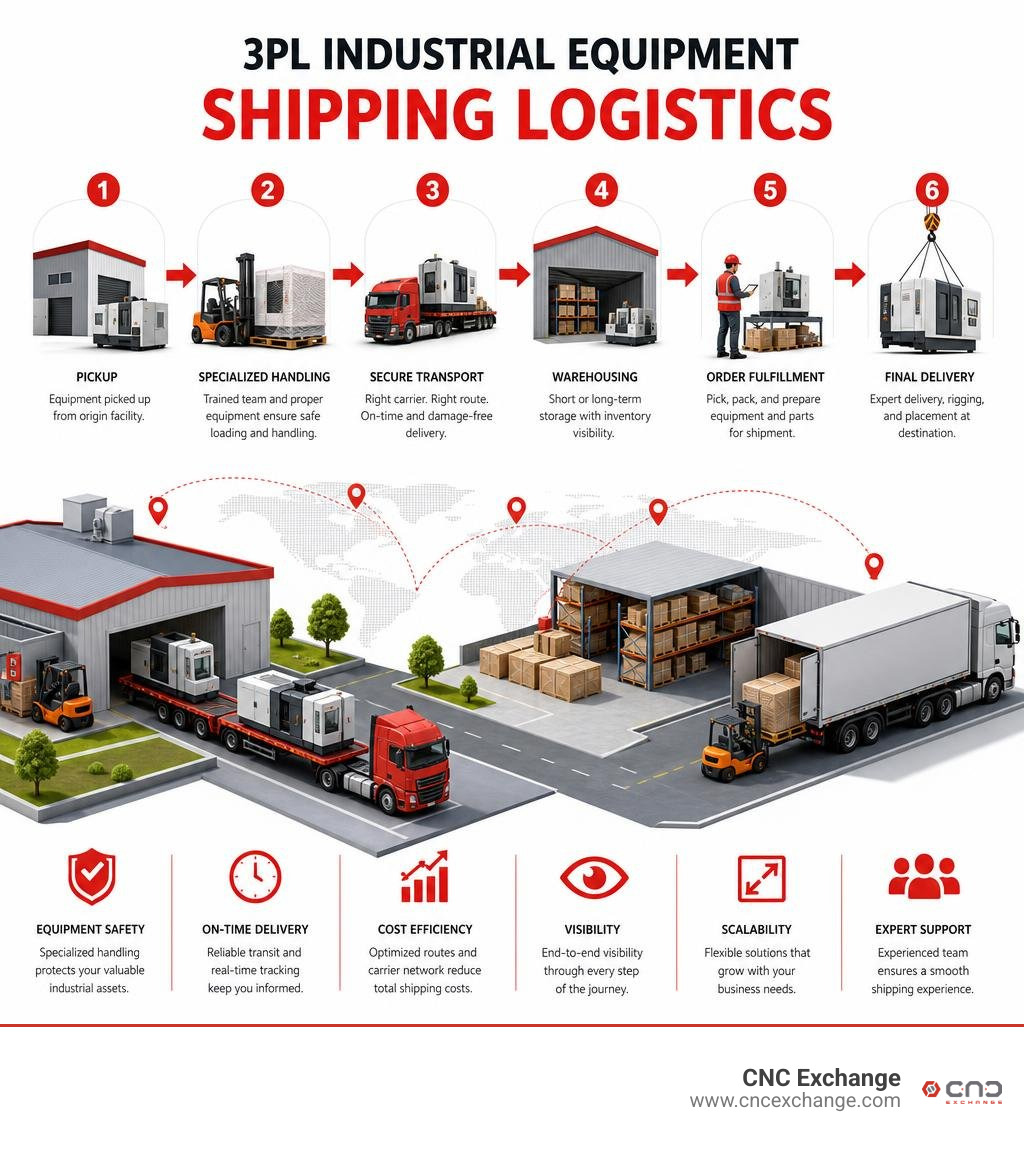
While individual service agreements differ, a typical 3rd party logistics workflow follows a logical 6-step operational cycle from production floor to final destination:
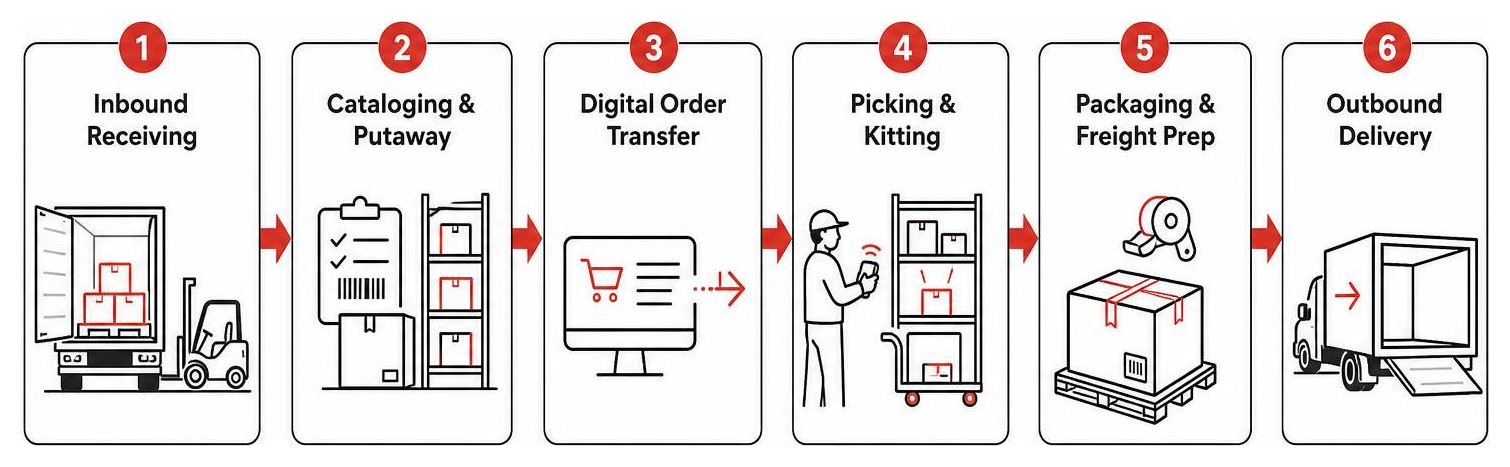
- Inbound Receiving: The 3PL facility receives shipments directly from manufacturing facilities or overseas suppliers via ocean, rail, or truckload carriers.
- Cataloging & Putaway: Warehouse staff inspect incoming freight, scan barcodes into software systems, and store items in designated rack locations.
- Digital Order Transfer: An order placed via an e-commerce platform or ERP system automatically transmits order parameters to the 3PL’s warehouse software via instant API or EDI digital integrations.
- Picking & Kitting: Warehouse operators locate the specified items using handheld RF scanners or automated goods-to-person robotics and bring them to packing stations.
- Packaging & Freight Preparation: Products are safely packaged, strapped to pallets if necessary, weighed, labeled, and staged on shipping docks for carrier pickup.
- Last-Mile Delivery & Exception Management: The carrier completes final delivery to the end buyer, while automated systems track milestones, issue proactive alerts, and manage unexpected transit delays.
Comparing Logistics Models: 3PL vs. 4PL vs. Freight Forwarders
Choosing the right supply chain outsourcing partner requires understanding how different logistics models divide operational control, strategic oversight, and physical transportation duties.
| Logistics Feature | Freight Forwarder | 3rd Party Logistics (3PL) | 4th Party Logistics (4PL) |
|---|---|---|---|
| Primary Scope | International transit & freight booking | Tactical execution of shipping & storage | Strategic end-to-end supply chain integration |
| Physical Assets | Non-asset; books space on airlines/vessels | Asset-based or non-asset network combinations | Non-asset strategic managers |
| Inventory Storage | Minimal to none (transit staging only) | Comprehensive warehousing & inventory management | Oversees 3PL warehouses strategically |
| Customs Clearance | High expertise in customs & documentation | Varies; often offered as an integrated add-on | Coordinates third-party customs brokers |
| Client Control | High client management required | Operational partnership with shared execution | Single point of strategic control |
Freight forwarders focus specifically on arranging cargo transport across international borders, handling international freight documentation, and securing space on container ships or air cargo carriers without taking physical custody of long-term inventory.
In contrast, a 3PL handles both physical storage and execution of freight movements. Moving further up the complexity scale, a 4PL acts as an overarching supply chain integrator, managing multiple 3PL providers, carrier networks, software vendors, and strategic planning on behalf of a corporation. Large freight companies like C.H. Robinson 3PL Services even offer hybrid options that blend multi-modal 3PL capacity with strategic 4PL management platforms.
Asset-Based vs. Non-Asset-Based Logistics Models
When evaluating 3rd party logistics providers, another critical distinction lies in equipment ownership:
- Asset-Based Providers: These firms directly own physical real estate, truck fleets, drop-trailers, and specialized loading machinery. They maintain direct operational control over their drivers and facilities, providing high reliability on high-volume lanes. When loading heavy machinery, having dedicated equipment like a heavy-duty Hyster S50XL Lift ensures safe loading without waiting on outsourced rental equipment.
- Non-Asset-Based Providers: These providers operate as freight brokers and technology platforms, leveraging digital matching networks to source capacity across thousands of independent motor carriers. They offer massive flexibility, broader geographic coverage, and responsive spot-market capacity without being tied to specific regional lanes.
- Asset-Light Carriers: A hybrid model where the provider owns key infrastructure (like strategic regional hubs) while partnering with vetted third-party owner-operators to scale total capacity.
Interestingly, industry data reveals that 51% of shippers report no performance difference between asset-based and non-asset-based providers, choosing to utilize both based on specific shipping lane needs.
Primary Types of 3rd Party Logistics Providers
Different business sectors require distinct operational specialties, leading to several primary categories of 3PL providers:
- Warehouse-Based 3PLs: Specialize in physical inventory storage, order pick-and-pack operations, cross-docking, and kitting.
- Transportation-Based 3PLs: Focus primarily on freight movement, offering dedicated truckload, less-than-truckload (LTL), intermodal, air, and ocean transport services.
- Financial & Information-Based 3PLs: Focus on technology solutions, freight auditing, rate benchmarking, spend management analysis, and accounting oversight across global supply chains.
- Cold Chain 3PLs: Maintain specialized temperature-controlled facilities and refrigerated transport trailers essential for pharmaceuticals, fresh food, and chemical products.
- Specialized Industrial Logistics Providers: Handle heavy machinery, oversized manufacturing equipment, riggers, and flatbed freight requiring heavy overhead lifting capabilities.
Business Benefits, Cost Savings, and Potential Drawbacks
Outsourcing logistics operations to a dedicated partner yields measurable financial and operational advantages, though businesses must also anticipate potential risks.
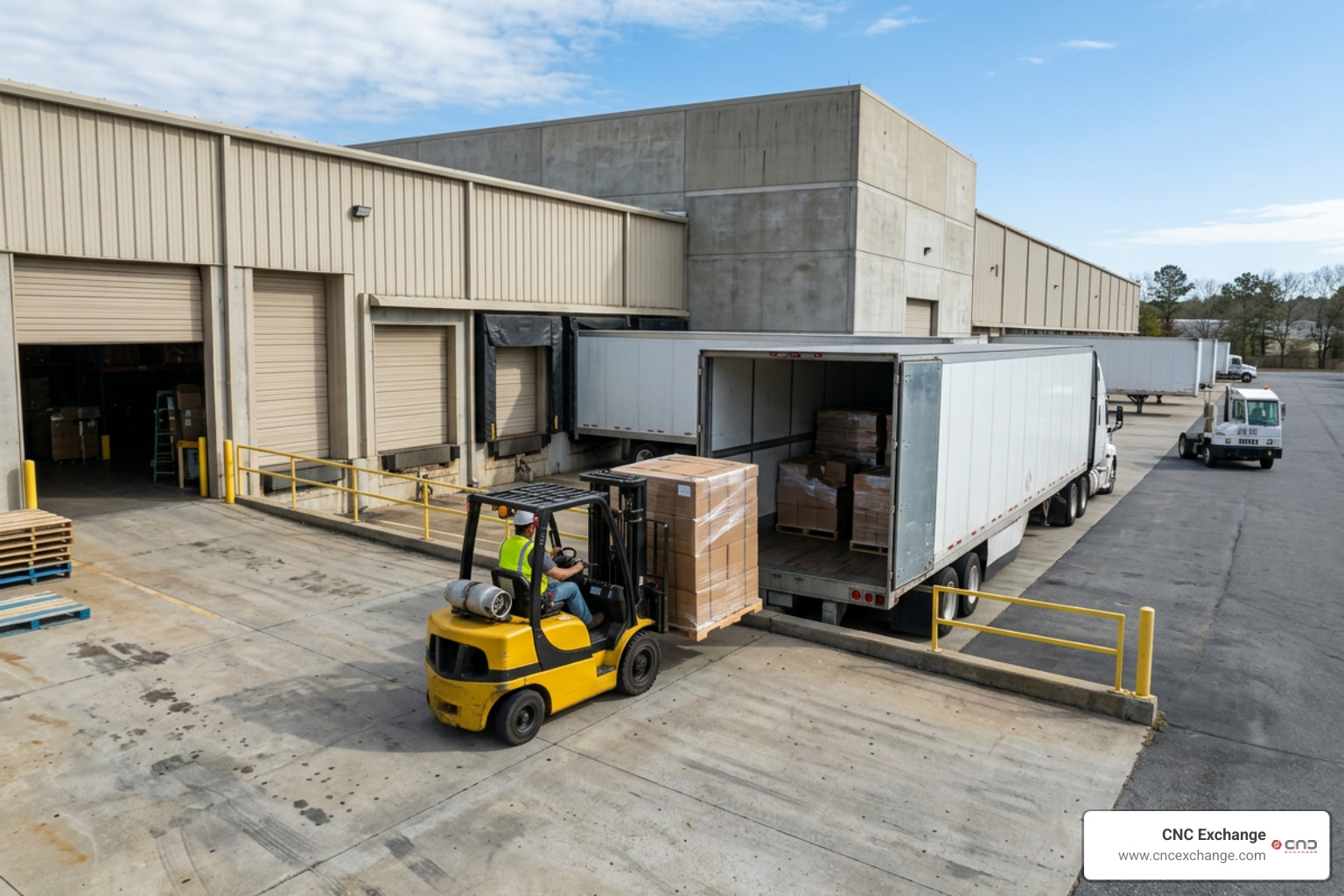
The financial impact of the global 3PL industry is immense, highlighted by major marketplace operators like Amazon generating $172,162 million in gross 3PL logistics revenue in 2025 alone. Working with a 3PL transforms major capital expenses (building warehouses, purchasing forklift fleets, leasing trucks) into predictable variable operating expenses that expand or contract directly with business volume.
3PLs aggregate freight volumes across thousands of clients, allowing small and mid-sized manufacturers to access deeply discounted shipping rates that would otherwise be impossible to secure individually. Furthermore, working with established logistics specialists reduces shipping damage risks and improves delivery speed—strategic 3PL facility placement in North America allows businesses to reach up to 85% of the population within two days via standard ground freight.
However, outsourcing logistics is not without potential drawbacks:
- Loss of Direct Oversight: Entrusting fulfillment to an external partner means relying on their operational discipline to uphold your brand standards.
- Integration Friction: Connecting legacy company software to a provider's warehouse systems can present temporary technical hurdles.
- Service Level Vulnerability: Partnering with an understaffed or poorly managed provider can result in delayed orders, inaccurate stock reports, and customer dissatisfaction.
How Technology Transforms Modern Supply Chain Management
Modern supply chains run on advanced digital infrastructure. Key technology solutions utilized by top-tier 3rd party logistics providers include:
- Warehouse Management Systems (WMS): Software platforms that optimize storage slotting, manage bin locations, track inventory levels in real-time, and streamline warehouse picking routes.
- Transportation Management Systems (TMS): Advanced engines that compare carrier rates across lanes, automate shipment scheduling, optimize routing, and centralize freight billing.
- Real-Time Tracking & IoT Visibility: Digital sensors and track-and-trace portals that provide continuous updates on shipment coordinates, transit milestones, and environmental variables.
- GenAI & Automated Documentation: Generative AI tools and automated EDI/API connections eliminate manual data entry, streamline customs entry processing, and trigger immediate alerts when delivery exceptions occur. Leading logistics companies like Ryder 3PL Solutions integrate these cutting-edge digital platforms with autonomous warehouse robotics and automated goods-to-person systems to dramatically increase fulfillment speed and order accuracy.
Key Factors to Consider When Selecting a 3PL Partner
Choosing a 3PL is one of the most critical decisions an operational leadership team can make. To ensure a smooth transition and protect brand reputation, systematically evaluate candidates using these key selection criteria:
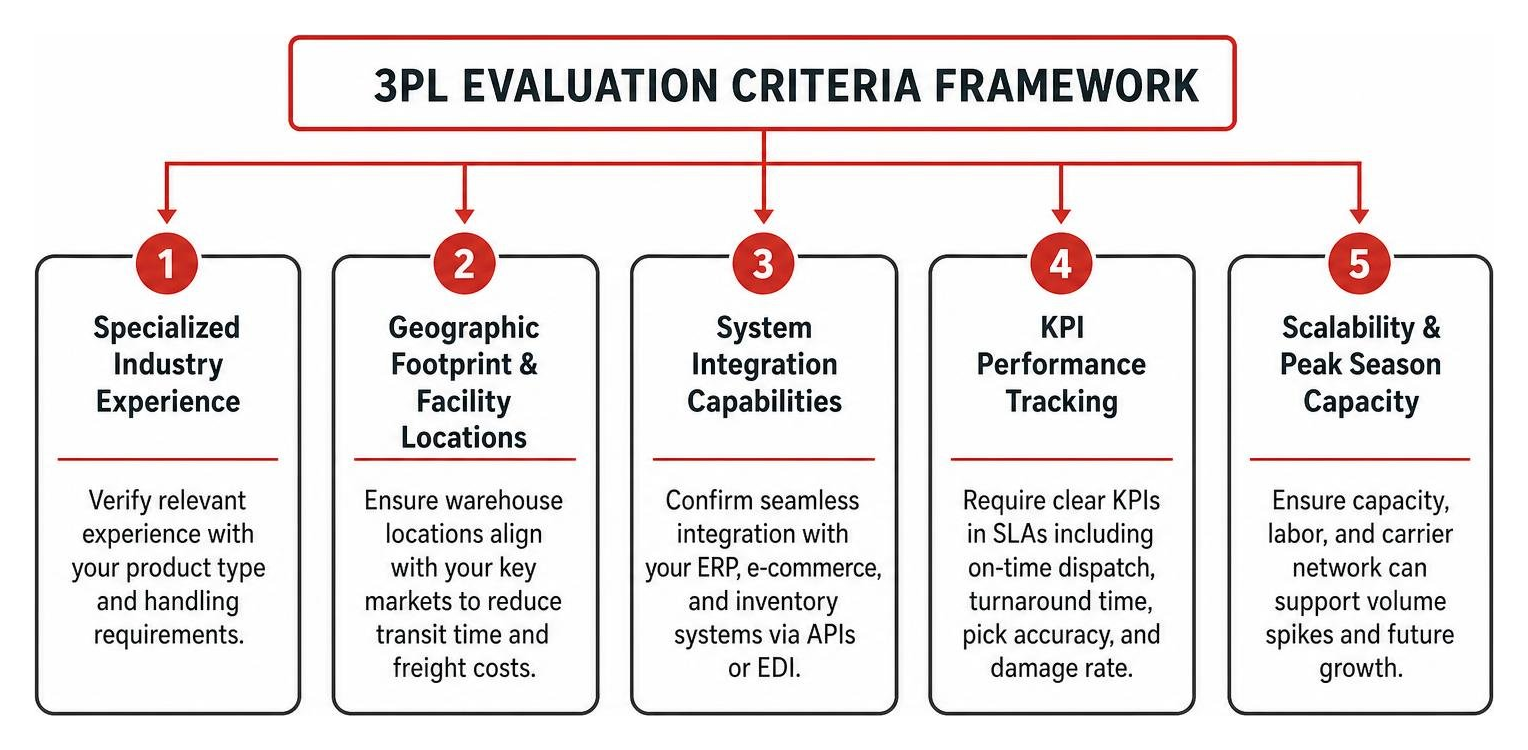
- Specialized Industry Experience: Verify that the 3PL has experience handling your specific product type, whether that means delicate consumer items or heavy machinery requiring industrial cranes and specialized loading bays.
- Geographic Footprint & Facility Locations: Ensure their warehouse hubs align with your primary buyer markets to minimize transit times and total freight spend. Local tools like the Goodfirms 3PL Directory can help identify trusted regional facilities near major industrial corridors like the greater Chicago area in Illinois.
- System Integration Capabilities: Confirm that their software seamlessly integrates with your existing ERP, e-commerce storefronts, and inventory management tools via plug-and-play APIs or EDI protocols.
- KPI Performance Tracking: Demand clear, transparent Key Performance Indicators (KPIs) written into service level agreements, including on-time dispatch rate, dock-to-stock turnaround time, inventory pick accuracy, and damaged shipment percentages.
- Scalability & Peak Season Capacity: Ensure the provider has the physical space, labor access, and carrier relationships needed to support your sudden volume spikes and long-term business growth.
- Transparent Fee Structures: Look for straightforward pricing models that break down storage costs, handling fees, shipping surcharges, and accessorial charges clearly without hidden operational penalties.
Frequently Asked Questions About 3rd Party Logistics
What is the main difference between a 3PL and a freight forwarder?
A freight forwarder acts primarily as a travel agent for cargo, specializing in international ocean/air freight booking, trade documentation, and customs clearance without taking physical control of inventory long-term. A 3rd party logistics (3PL) provider offers a broader operational scope that includes physical warehouse storage, inventory management, order picking and packing, local distribution, and comprehensive supply chain execution.
How does a 3PL help reduce overall transportation costs?
3PL providers lower shipping spend by combining freight volumes across their entire client base, unlocking volume rate discounts from motor carriers that individual businesses cannot negotiate alone. Additionally, 3PLs utilize sophisticated Transportation Management Systems (TMS) to audit freight bills for billing errors, select the most cost-effective shipping modes, optimize truck routing, and reduce empty backhaul miles.
How quickly can a business onboard and go live with a 3PL partner?
Standard supply chain onboarding—which includes contract negotiation, scope of work definition, warehouse slotting, and software integration—typically takes anywhere from two to six weeks depending on complexity. However, for urgent freight or standardized fulfillment setups, agile 3PL providers can activate basic account workflows in as little as 24 to 48 hours once product specs and operational terms are finalized.
Conclusion
Outsourcing logistics management to a reliable 3PL partner transforms supply chain operations from an internal headache into a competitive advantage. By leveraging established carrier networks, modern warehouse automation, and specialized material handling equipment, growing businesses can scale operations rapidly, optimize transit costs, and maintain total focus on building superior products.
At CNC Exchange, headquartered in Prospect Heights, Illinois, we understand that buying or selling industrial machinery is only half the battle—getting heavy equipment safely transported, rigged, and delivered to your shop floor on time is what keeps your business running smoothly. Whether you are upgrading your facility with high-precision Fabrication Machinery or liquidating surplus shop assets, combining fair-market equipment transactions with dependable, professional logistics planning ensures your business stays ahead of the competition.