
Buy a Used CNC With Confidence, Not Guesswork
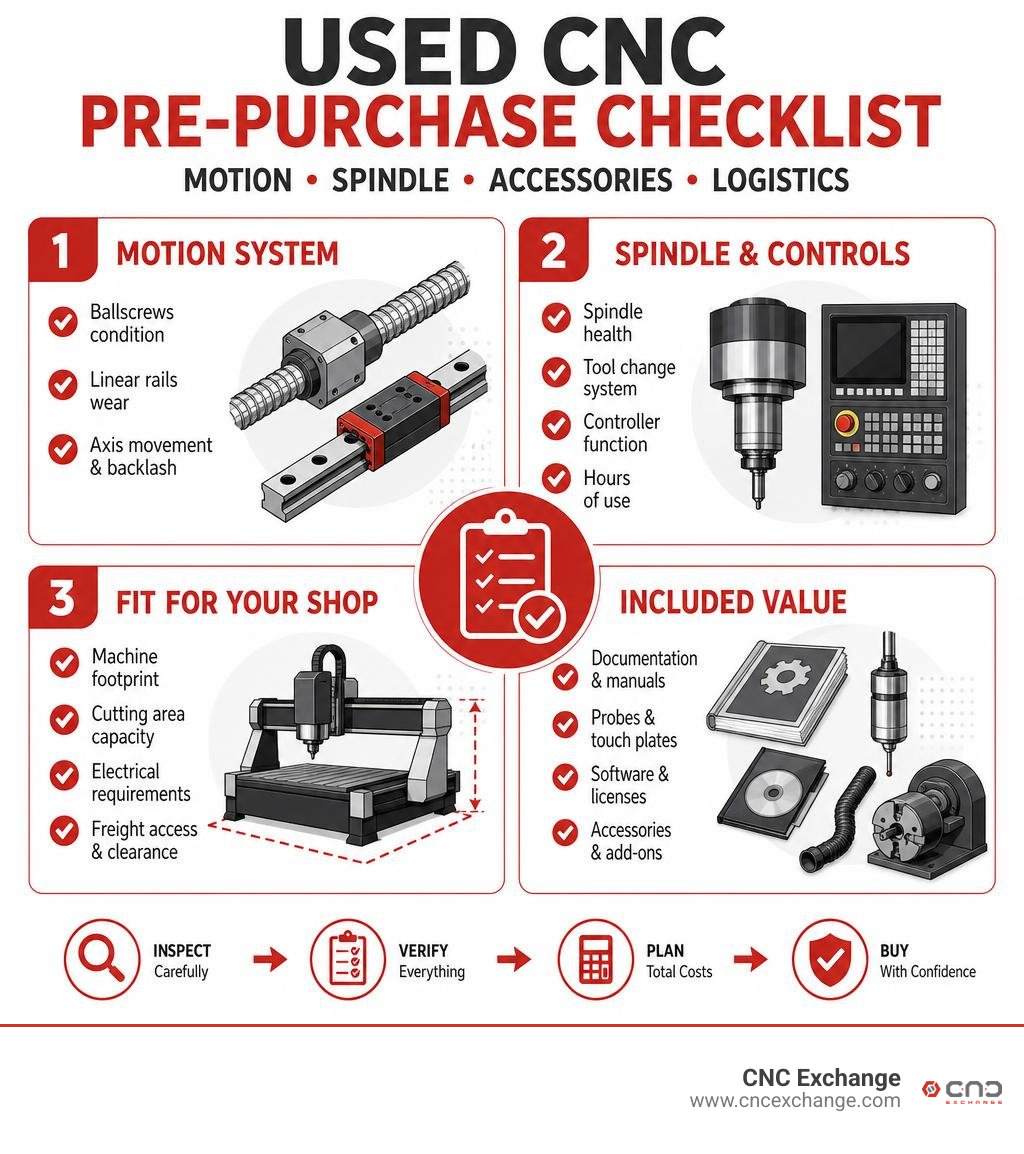
The best affordable used CNC is not simply the lowest-priced machine. It is the one with verified motion accuracy, a healthy spindle, complete controls and software, and shipping costs you can manage. Before you buy, inspect these four areas:
- Motion system: Check ballscrews, rails, and axis movement for backlash, binding, or missed positioning.
- Spindle and controls: Confirm spindle horsepower, tool-change method, hours of use, and whether the controller runs correctly.
- Fit for your shop: Measure the machine footprint, cutting area, electrical needs, and freight access before committing.
- Included value: Documentation, touch plates, software, dust collection, rotary axes, and laser attachments can save meaningful money after purchase.
Compact machines can be especially strong value when space is limited. For example, a ballscrew-driven 2' x 2' benchtop CNC can offer repeatability around ±0.001 inch while fitting into a much smaller shop footprint than a full-size production router. But that precision only matters if wear items, setup, and accessories have been checked carefully.
I am Jared Gray, with more than 12 years of experience buying, selling, brokering, and inspecting used CNC and other chip-making equipment. I have worked across sourcing, showroom evaluation, plant liquidations, and machine removal, so this checklist focuses on the details that affect real ownership cost.
Evaluating Drive Mechanics and Motion Controls on a Used CNC
When we evaluate any pre-owned milling setup, the mechanical drive system tells us the true story of how the machine was treated. Unlike belt-driven setups that introduce flex under heavy cuts, precision ballscrew mechanisms and profile linear guide rails maintain structural rigidity across long production cycles. However, mechanical components are subject to wear, contamination, and misalignment over time.
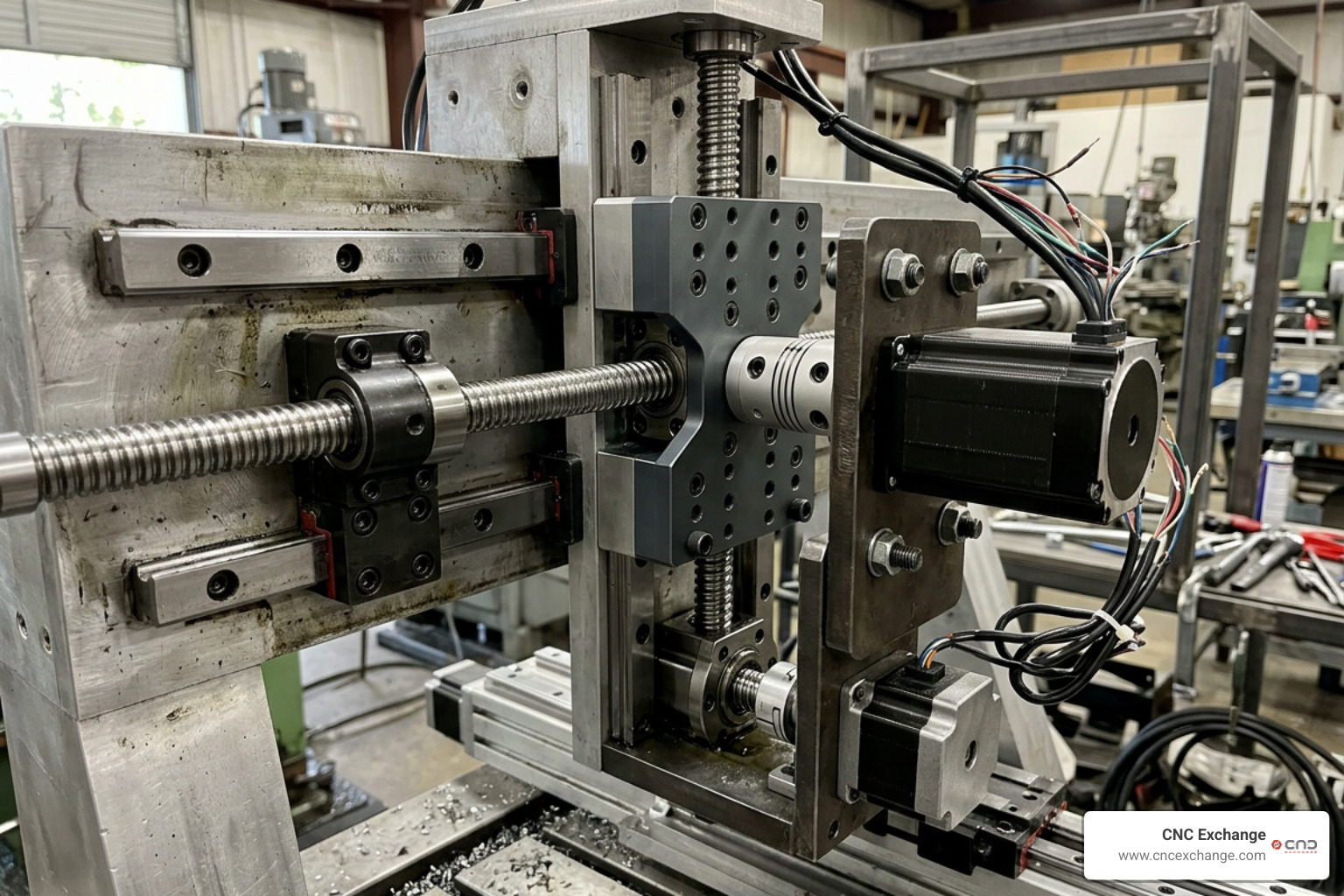
A machine might look immaculate on the outside, but if the drive mechanics have accumulated mechanical backlash or lost their preload, your parts will suffer from dimensional inaccuracy and poor surface finish. Inspecting the motion control architecture—from the physical drive screws to the motors driving them—is your first line of defense against costly surprise repairs.
Drive Motors Comparison: NEMA 23 vs. NEMA 34 vs. ClearPath Servos
The choice of drive motors dictates not only how fast a machine cuts, but also how forgiving it is when pushing through tough stock. On platforms like the Benchtop PRO 2424 2' x 2' CNC Machine | Avid CNC , buyers will encounter three common motor packages: NEMA 23 open-loop steppers, NEMA 34 high-torque steppers, or closed-loop Teknic ClearPath brushless servos.
Open-loop stepper systems (NEMA 23 and NEMA 34) provide reliable, cost-effective power. The NEMA 23 configuration delivers cutting speeds around 200 IPM and rapids up to 300 IPM, making it suitable for light production and prototyping. Stepping up to NEMA 34 motors boosts holding torque, lifting cutting feed rates to 250 IPM and rapid travel to 400 IPM.
Closed-loop brushless servos represent a major leap forward in productivity and error prevention. ClearPath servos run cutting feeds up to 350 IPM and rapid traverses up to 500 IPM, doubling drivetrain resolution down to 0.0001 inches. More importantly, closed-loop servos feature continuous positional feedback:
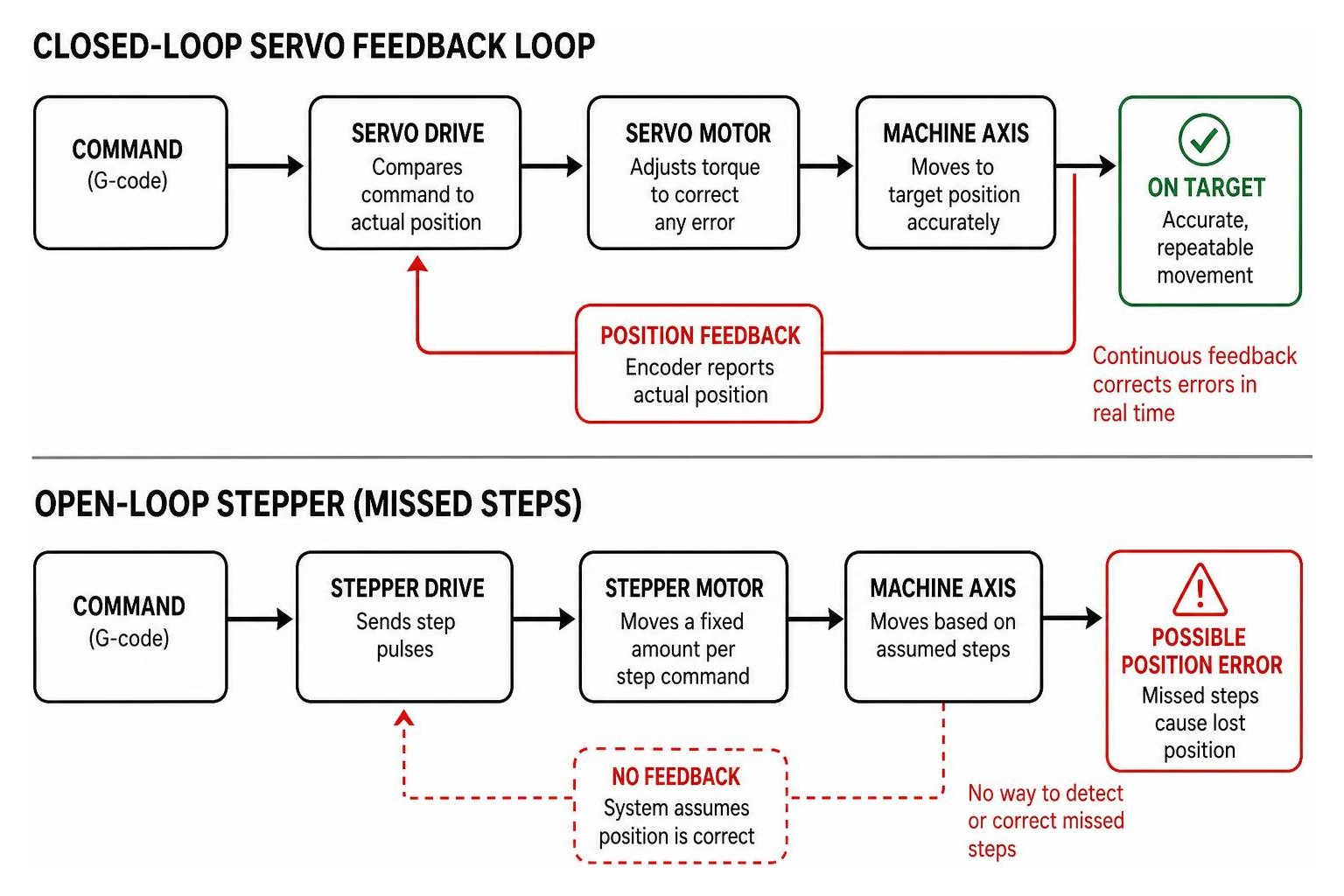
If a tool encounters an unexpected knot in hard timber or takes an aggressive cut in aluminum, an open-loop stepper might lose steps silently, ruining the part without alerting the operator. A closed-loop servo dynamically compensates with instantaneous torque or halts the run safely before dimensional drift occurs.
Inspecting Ballscrew Integrity and Positioning Accuracy in a Used CNC
To verify that a machine delivers its factory-rated repeatability of ±0.001" (0.025mm) and cutting accuracy of ±0.005" (0.127mm) or better, you must physically test the ballscrews and linear rails for axial play.
Start by mounting a dial test indicator with a magnetic base to the machine frame, placing the stylus directly against the gantry block or spindle housing. Manually apply alternating push-pull force along each axis. Any measured needle deflection beyond 0.001" before motor movement indicates worn ballscrew nuts, degraded bearing blocks, or loose thrust bearings.
Inspect the screw flutes across the primary cutting envelope. Dual-drive gantries must be checked for synchronization; if one side binds or lags behind the other, the gantry will rack out of square, inducing taper into square cuts. Always verify a used CNC machines service history to confirm regular lubrication intervals, as dry ballscrews accelerate metal-on-metal wear exponentially.
Spindle Configurations, Work Envelopes, and Structural Rigidity
A rigid chassis means little without a spindle capable of sustaining appropriate chiploads across your chosen raw materials. Moving beyond entry-level trim routers to high-frequency, variable-frequency-drive (VFD) spindles transforms a machine from an occasional hobby unit into a daily workhorse.
Spindle Selection: 4 HP vs. 8.7 HP VFD Spindles and Routers
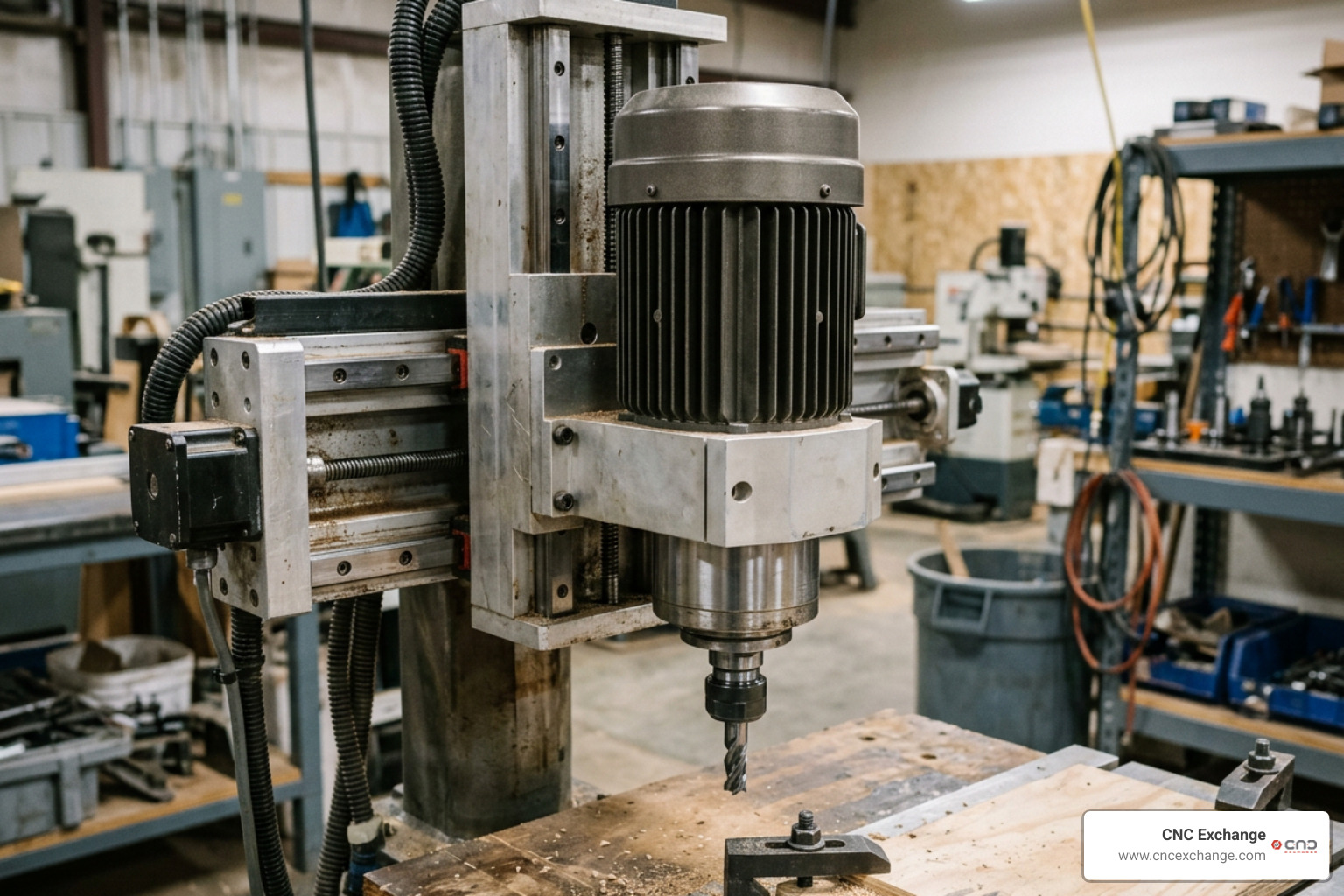
While handheld routers are inexpensive to replace, their brush-style universal motors drop torque dramatically under load, generate deafening high-pitched noise, and suffer from excessive collet runout. Industrial VFD-driven spindles provide constant torque across broad RPM ranges (typically 6,000 to 24,000 RPM) and run much quieter thanks to precision balanced bearings.
When browsing the secondary market, you will commonly find two major VFD power classes:
- 4.0 HP Spindles: Excellent for woodworking, plastics, signs, and moderate non-ferrous metal machining. These provide sufficient material removal rates (MRR) without overwhelming standard 220V single-phase workshop electrical supplies.
- 8.7 HP Spindles: Built for heavy-duty commercial production and aggressive aluminum milling. They power through deep passes with large-diameter tooling, though they require substantial electrical drops and add mass to the Z-axis carriage.
Additionally, verify whether the spindle utilizes a manual ER-collet chuck system or an automated "Smart" tool-change interface. Smart spindles equipped with pneumatic drawbars and sensor feedback streamline multistep jobs, but require clean pneumatic air lines and correctly wired controller macros.
Workspace Requirements and Z-Axis Clearance
Footprint efficiency is critical when shop floor real estate is limited. The Benchtop PRO platform packs a generous 26" x 26" (660mm x 660mm) work area into an overall machine footprint of roughly 43" x 43" x 36.8"-42.7".
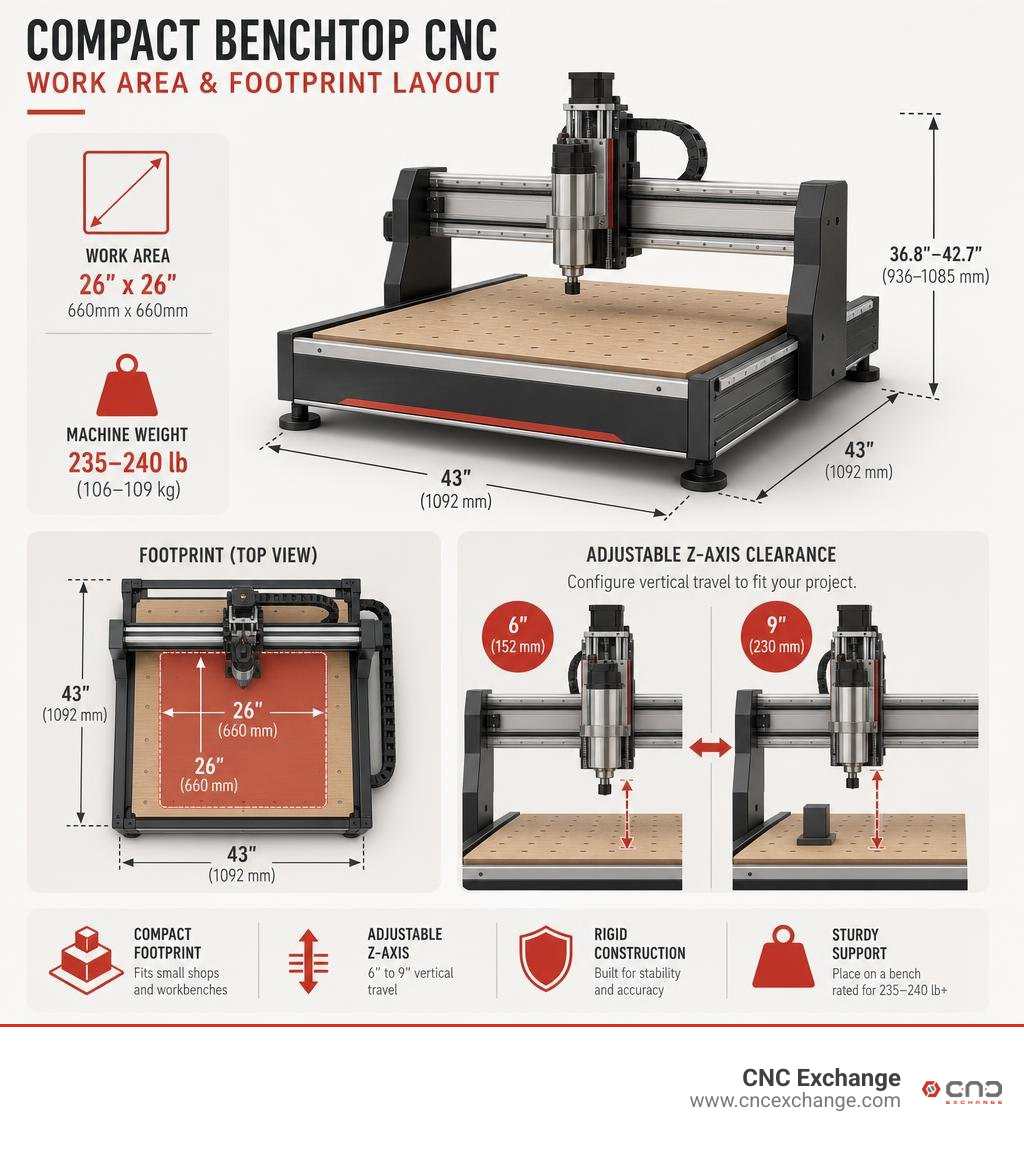
One unique mechanical advantage to look for is adjustable Z-axis clearance. By altering the structural crossmember positions, vertical travel can be configured from 6" up to 9" (152mm to 230mm). This travel versatility makes it easy to accommodate tall workholding vises, fourth-axis rotary chucks, or deep 3D carving billets without striking the gantry.
Just as shops evaluate used Doosan machines before setup, you should ensure your workbench can safely support the 235 to 240 lb static mass of the machine plus the dynamic cutting forces generated during rapid directional shifts.
Assessing Modular Add-Ons, Software, and Accessories
A pre-owned machine that includes modular production accessories represents substantial added value over a bare-bones base unit, saving you thousands in aftermarket hardware purchases.
High-Value Modular Upgrades: Lasers, 4th Axis, and Pendants
When tallying up the price of a used setup, look closely for premium add-ons:
- Deployable 45W Laser Kits: Modern solid-state lasers stow neatly on the Z-axis carriage. A 45W system can cut 3/4" plywood in a single pass and handle high-resolution vector engraving without disturbing the mechanical spindle setup.
- Rotary 4th Axis Units: A headstock/tailstock rotary table expands your 3-axis flatbed into a 4-axis indexing lathe, letting you carve complex architectural turnings, custom handles, and symmetrical components.
- Wireless CNC Pendants: Handheld industrial pendants allow you to jog axes right at the workpiece, set manual origins, and override feed rates on the fly without tethering you to the PC keyboard.
- Automated Auxiliary Relays: Software-controlled relays automatically trigger dust extractors, flood pumps, or mist air blasts when the G-code cycle begins, preventing dry tool friction and messy shops.
Control Software and Calibration Tools on a Used CNC
Software licensing and calibration hardware can make or break your immediate setup experience. Industrial-grade control suites like CNC12 paired with auto-zero touch plates provide streamlined workpiece zeroing and automated tool height calibration.
A dual-surface touch plate system eliminates manual paper-feeler alignment by probing X, Y, and Z datums automatically to within fractions of a thousandth of an inch. Ensure the seller supplies all original controller unlock keys, software installation media, and custom post-processor files compatible with standard CAM software like Fusion 360, Vectric VCarve, or SolidCAM.
Logistics, Assembly, and Maintenance Cost Considerations
Factoring in transport and assembly logistics is vital when securing affordable equipment. A new benchtop unit typically carries an OEM base price of $6,831.00 and standard factory shipping lead times of up to 8 weeks. Buying secondary equipment eliminates the factory wait time, but requires a structured plan for safe transport.
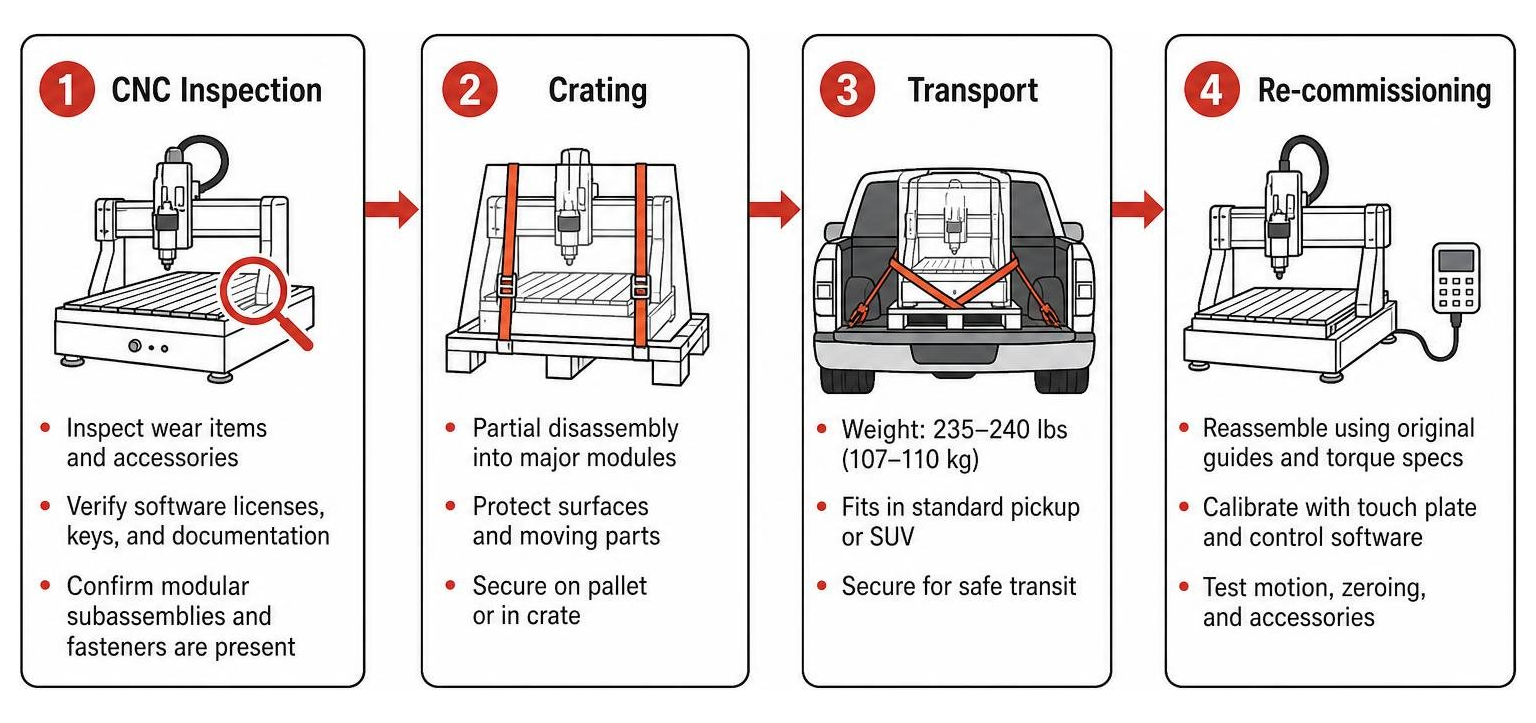
At an assembled weight of 235 to 240 lbs (107 to 110 kg), a 2' x 2' benchtop router can be transported in the back of a standard pickup or SUV if broken down into major subassemblies. Because these machines feature a modular aluminum extrusion framework with an estimated 3-5 hour assembly time, partial disassembly for transport is straightforward—provided original assembly guides and torque specifications are preserved.
When assessing long-term running costs, inspect consumable wear items before finalizing a deal:
- Check the rubber wiper seals on linear carriage blocks for tearing or dry rot.
- Verify that ballscrew lubrication ports accept grease smoothly without backed-up pressure.
- Inspect the high-flex drag chains for brittle links, cracked wiring jackets, or pinched coolant tubes.
Whether buying directly from a private seller or navigating the used industrial equipment auction scene, knowing these mechanical details keeps your total investment well within budget.
Frequently Asked Questions About Affordable CNC Machinery
What is the expected lifespan of ballscrews on a benchtop CNC?
With proper lubrication and chip protection, precision ground and rolled ballscrews routinely exceed 5,000 to 10,000 operating hours. Premature failure is almost always caused by fine particulate contamination (such as abrasive MDF or carbon fiber dust) wearing past damaged wiper seals, which creates axial backlash. Replacing a standard ballscrew assembly typically costs between $150 and $400 per axis.
Can a compact benchtop CNC machine handle non-ferrous metals?
Yes. Thanks to rigid dual-ballscrew drives, fully supported linear rails, and high-torque VFD spindles, compact benchtop machines excel at milling non-ferrous alloys like 6061 aluminum, brass, and copper. Maintaining appropriate feed per tooth (chipload), using single-flute carbide endmills, and applying an air-blast or mist lubrication system will produce mirror-grade surface finishes.
How do closed-loop servos prevent ruined parts compared to steppers?
Open-loop steppers operate blind: the controller sends electrical pulses commanding movement, but has no sensor to confirm the motor reached position. If the tool hits an aggressive load, the motor stalls and loses position, causing the remaining toolpath to carve in the wrong location. Closed-loop servos incorporate high-resolution optical or magnetic encoders that track rotor angle thousands of times per second. If an axis deviates from its target, the drive applies corrective torque instantly or halts the program safely to protect your workpiece.
Conclusion
Finding an affordable, high-precision used CNC machine does not have to be a gamble. By methodically inspecting the drive ballscrews, evaluating motor architecture, verifying spindle runout, and cataloging included modular accessories, you can secure production-ready machinery at a fraction of brand-new retail prices.
At CNC Exchange, we help machine shops, fabricators, and serious hobbyists find verified, high-performance equipment that delivers real ROI on day one. Talk to Our Machine Tool Experts Today to discuss your application requirements, or explore available CNC machinery for sale to find your next machine today.