
How to Choose a Used Haas CNC Mill
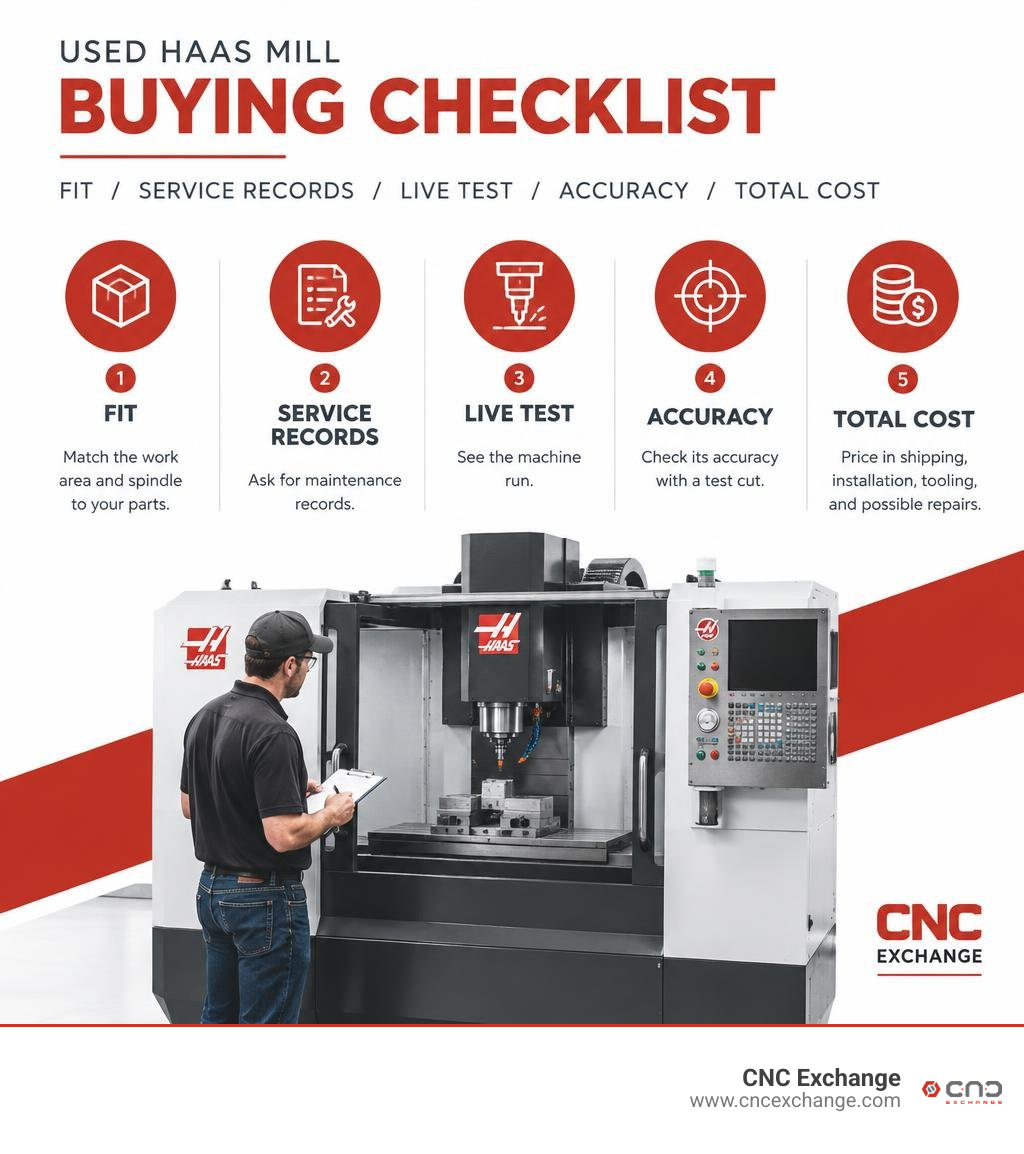
To choose a used haas cnc mill, match its work area and spindle to your parts, then verify its condition before you buy. Ask for maintenance records, see the machine run, check its accuracy with a test cut, and price in shipping, installation, tooling, and possible repairs. A low asking price is not a bargain if the mill cannot hold the tolerances your work needs.
Haas mills are common on the used market, but model names and machine age tell only part of the story. This guide will help you compare models, inspect a machine, and judge the full cost of getting it into production.
I'm Jared Gray. I've spent over 12 years buying, selling, and brokering manufacturing equipment, and I'll use that experience to help you evaluate a used haas cnc mill.
How to Evaluate a Used Haas CNC Mill Before You Buy
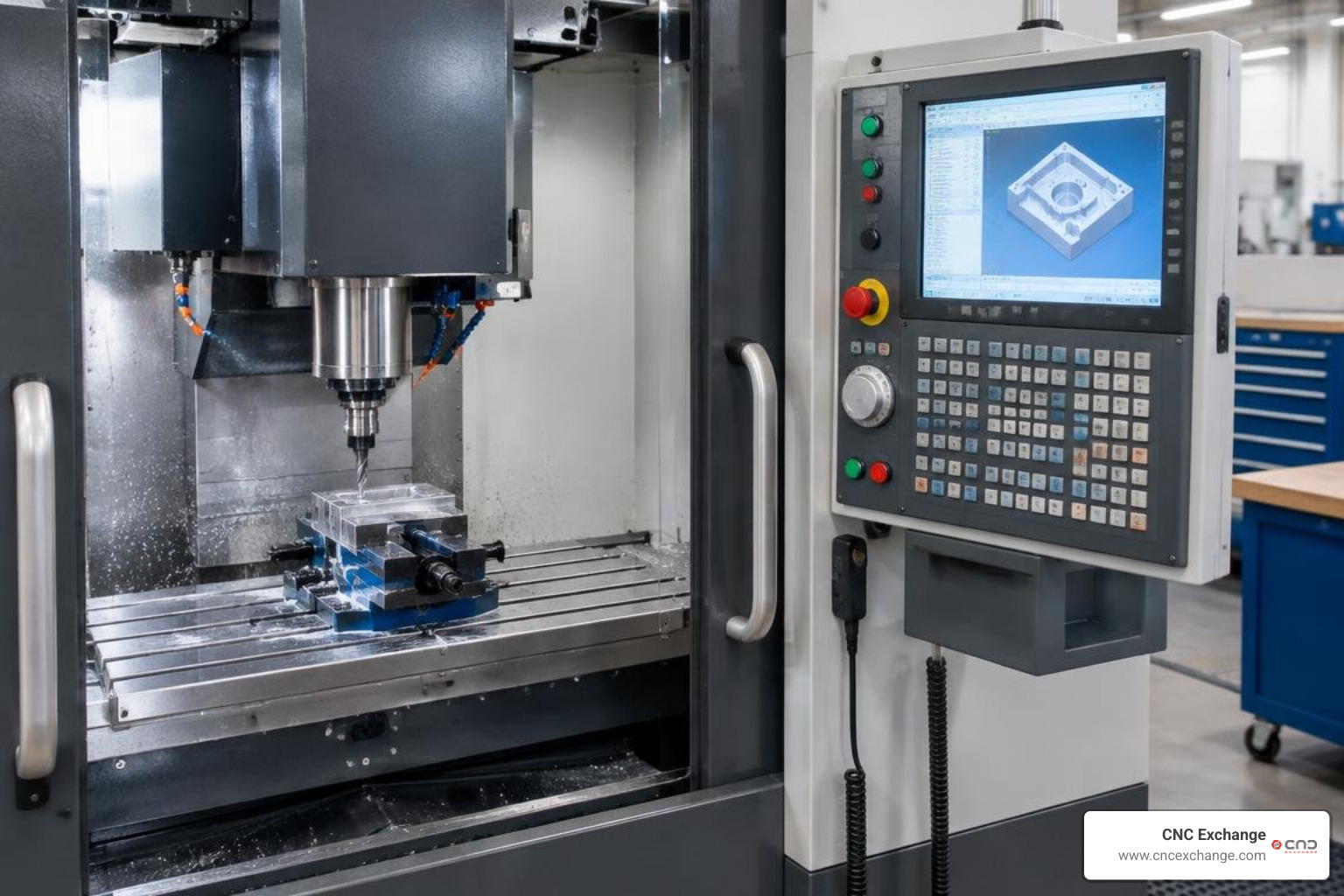
Haas is the largest machine tool builder in the western world, and it has produced over 50% of the CNC machines sold in the United States. More than 200,000 Haas machines have been installed since 1983. For buyers, that means plenty of choices. It also means plenty of machines that were run hard, so we start every evaluation with the same list:
- Machine age: Age affects control generation, parts support, and price, but it is a poor judge of condition by itself. A ten-year-old mill that was serviced well can beat a five-year-old one that was neglected.
- Spindle hours: Ask for both power-on hours and cutting hours. Cutting hours show how much real work the machine has done.
- Control generation: Newer controls are easier to program, easier to connect to a network, and easier to support. Check the operator's manual for your control, such as the Haas NGC mill operator's manual, so you know what features to expect.
- Included options: Through-spindle coolant, a probe, a high-speed spindle, extra tool pockets, and a rotary-ready package can add real value. Confirm each option is installed and working, not just listed.
- Maintenance records: Paper trails show how the machine was treated.
- Operator history: Ask who ran it, what materials it cut, and whether it ran one shift or three.
- Retrofit status: Find out if the machine has been rebuilt, re-controlled, or had major parts replaced, and who did the work.
Value also matters. A used Haas mill typically keeps about 50% to 70% of its original value after five years, depending on condition and hours. That is a strong figure, and it also means a well-kept machine can be resold later without much pain.
Why a used Haas CNC mill's maintenance history matters
Service logs are the closest thing a machine has to a medical chart. They tell you what we cannot see by walking around it.
Look for these items:
- Lubrication: Regular way and ballscrew lubrication prevents wear. Gaps in the records are a warning sign.
- Coolant care: Old, dirty, or neglected coolant can cause rust, odor, clogged pumps, and sticky components.
- Crash history: Ask directly. A crash can bend a spindle, damage the tool changer, or knock the machine out of alignment.
- Repair records: Replaced spindles, servo motors, or ballscrews are not automatically bad, but they should come with invoices and dates.
- Downtime: Frequent alarms and repeated repairs of the same part point to a deeper problem.
Good records protect resale value and performance. A machine with a documented history is easier to trust now and easier to sell later.
Match machine capacity to the work
The best machine is the one that fits your parts, not the one with the nicest paint. Before you shop, write down:
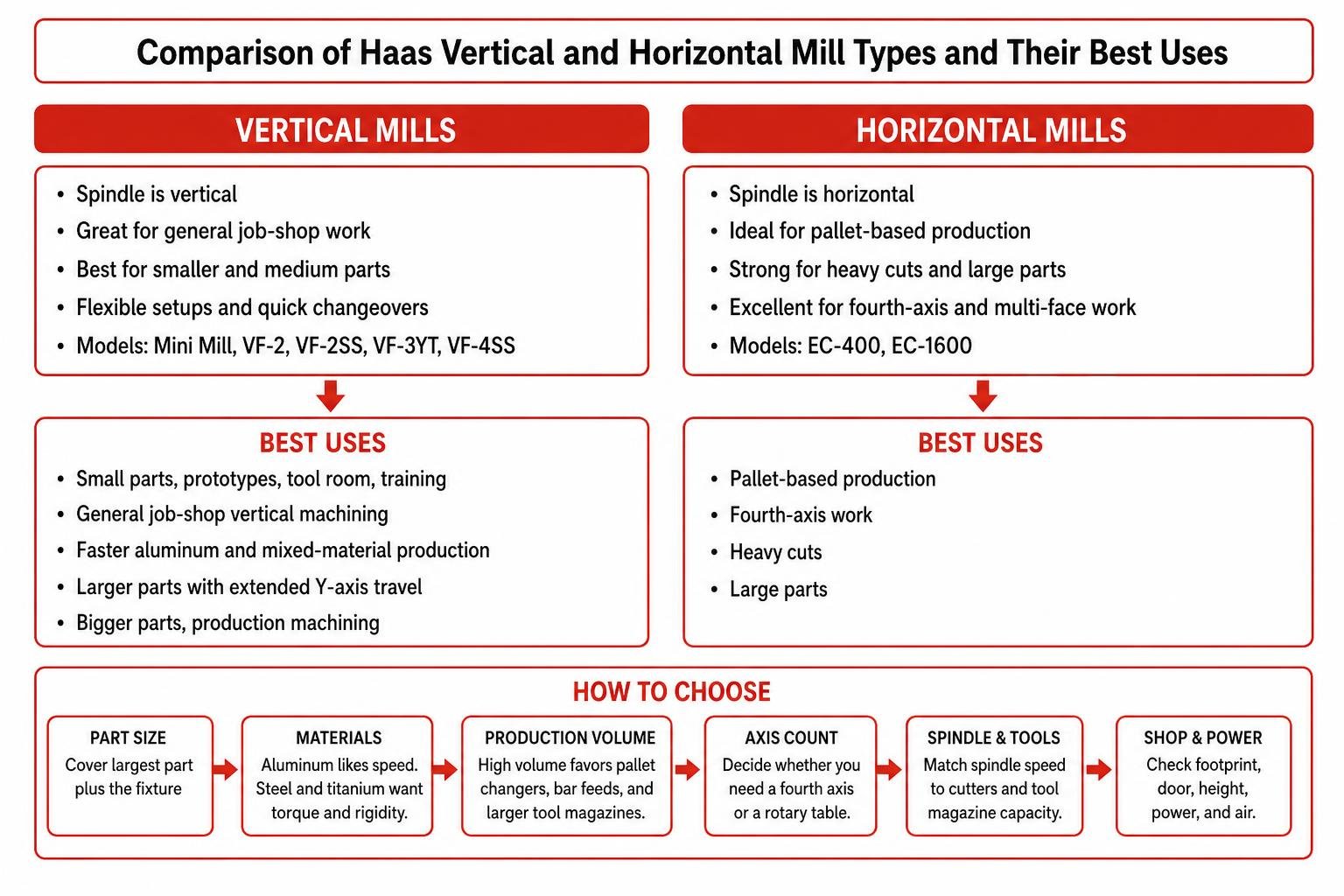
- Part size: Travels must cover your largest part plus the fixture.
- Materials: Aluminum likes speed. Steel and titanium want torque and rigidity.
- Production volume: High volume favors pallet changers, bar feeds, and larger tool magazines.
- Axis count: Decide whether you need a fourth axis or a rotary table now or later.
- Spindle speed and tool capacity: Make sure the spindle suits your cutters and the magazine holds enough tools for your longest job.
- Shop footprint and power: Measure the floor space, door width, and ceiling height. Confirm your voltage, phase, and air supply.
Common Models, Applications, and Used Haas Mill Prices
Haas offers many mills, but a handful show up again and again on the used market. Here is how they compare.
| Model | Typical applications | Price factors |
|---|---|---|
| Mini Mill | Small parts, prototypes, tool room and training work | Control age, spindle hours, options |
| VF-2 | General job-shop vertical machining | Model year, hours, through-spindle coolant |
| VF-2SS | Faster aluminum and mixed-material production | Super-speed spindle condition, hours |
| VF-3YT | Larger parts with extended Y-axis travel | Travel, options, condition |
| VF-4SS | Bigger parts, production machining | Spindle health, size, tooling |
| EC-400 | Horizontal machining, pallet-based production | Pallet system, hours, options |
| EC-1600 | Large horizontal work and heavy parts | Size, rigging cost, condition |
The Haas VF-2 is a popular workhorse. If you want a faster spindle, the VF-2SS vertical machining center is built for quicker cutting, especially in aluminum. For larger work, we often see buyers look at the VF-4SS, and we also list a second VF-4SS for comparison shopping.
Smaller shops doing little parts may prefer a Haas Mini Mill, which takes less floor space and costs less to move. The VF-3YT suits shops that need extra Y-axis travel for bigger parts.
If you run production, horizontals deserve a look. The EC-400 horizontal machining center works well for pallet-based jobs and fourth-axis work, while the EC-1600 handles much larger parts. A second EC-1600 listing is also worth a look.
What affects the price of a used Haas CNC mill?
Prices move with several factors: model year, overall condition, spindle hours, installed options, included tooling, service history, and current market demand. Demand is healthy. Used Haas mills often sell within 30 to 60 days on major industrial marketplaces.
A popular example is the VF-2. Resale prices typically run from $15,000 to $35,000, compared with roughly $50,000 to $60,000 new. Where a machine lands in that range depends on how many of the factors above work in its favor.
Keep these tips in mind:
- Compare several similar listings, not just one.
- Note the date of every quote. Prices drift with the market.
- Treat the ranges here as estimates, not guarantees. Condition can move a price a lot.
- Pay extra for documentation and verified performance, but not for a nice paint job.
Physical Inspection and Accuracy Checks
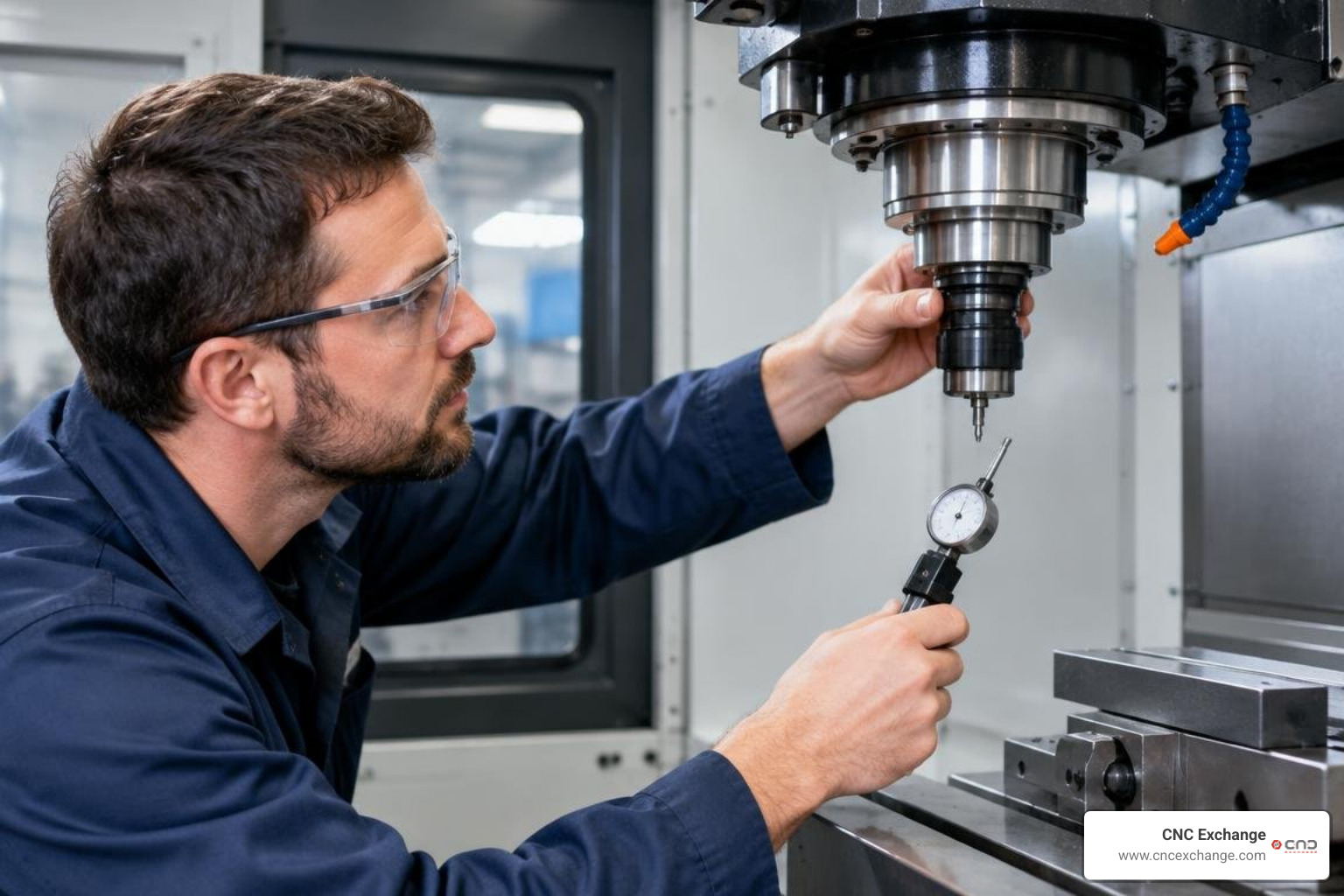
Photos and spec sheets are nice. Seeing the machine is better. If you cannot go yourself, send someone you trust, or hire a qualified technician.
Use this pre-purchase checklist:
- Castings: Look for cracks, repairs, or signs of impact.
- Ways: Check for scoring, uneven wear, or dry spots.
- Ballscrews: Look for pitting, rough movement, and signs of poor lubrication.
- Backlash: Measure it on each axis, and compare with the control's settings.
- Axis movement: Jog each axis through full travel. Listen for grinding, and watch for hesitation.
- Coolant system: Check pumps, nozzles, tank condition, and leaks.
- Tool changer: Run it repeatedly. Watch for hard clunks, misses, or slow changes.
- Electrical cabinet: Look for burnt smells, loose wiring, dust buildup, and amateur repairs.
- Alarms: Check the alarm history for repeating faults.
- Test cut: Always ask for one. A clamped part and a real cut tell you more than any brochure.
Bring good workholding for the test. A solid Haas vise helps you hold a test block steadily so the results reflect the machine and not the setup.
How to verify a used Haas CNC mill's accuracy and spindle health
Start with a full warm-up cycle. Many problems only appear when the spindle and axes reach operating temperature.
Then work through these checks:
- Spindle runout: Use an indicator on the spindle taper and a test bar. Excess runout hurts finish and tool life.
- Vibration, noise, and temperature: Run the spindle through its speed range. Listen for whine, rumble, or a rough spot at certain speeds. Check how hot the housing gets.
- Spindle taper and toolholder fit: Inspect for fretting, scoring, or damage. Toolholders should seat cleanly.
- Drawbar force: A weak drawbar can allow toolholders to loosen during cutting. Ask for a measurement or a service report.
- Indicator tests: Check squareness, tram, and axis travel with a dial indicator.
- Ballbar test: This reveals circularity errors, backlash, and servo mismatch.
- Laser calibration: For tight-tolerance work, a laser check shows positioning accuracy and repeatability.
- Test part: Cut a part that mirrors your real work, then measure it.
Agree on acceptance criteria before the test. For example, decide which tolerance and finish the machine must hit. That keeps the decision objective and the conversation friendly.
Buying, Ownership Costs, and Long-Term Support
You can buy from a dealer, at auction, or from a private seller. Dealers may offer more support. Auctions can offer strong value but demand more homework. Private sellers can be great, or they can be a gamble.
Whichever route you choose, verify the seller. Confirm the serial number matches the machine and the paperwork, and ask for ownership documents showing a clean title. Insist on a live demonstration. Use a secure method for your deposit, and avoid wiring money on a promise.
Then plan for the move: rigging, freight, installation, electrical setup, coolant, tooling, and software. Hold back a repair reserve too. Even a clean machine can need a belt, a sensor, or a pump after the move.
Support matters as well. Older controls can be harder to service, and some parts may take longer to find. Newer controls generally have better documentation and wider parts availability. Because Haas has such a large installed base, parts and service knowledge are widely available, but check support for your specific model and control before you commit. Downtime is expensive, so ask who will fix the machine when something fails.
When you are ready to shop, you can browse CNC machine listings with us, or get machine-tool evaluation help from our team.
Hidden costs, warranty terms, and seller due diligence
The purchase price is only one line on the bill. Budget for:
- Inspection fees
- Buyer's premium at auctions
- Sales taxes
- Loading and transport
- Commissioning and setup
- Add-ons such as workholding and tooling
Add-ons can be useful. A Haas Servo Bar 300 bar feed supports automated production, the HRT600 rotary table and SHRT310B rotary table add fourth-axis capability, and 5C tooling speeds small-part work.
On warranty and returns, terms vary a lot. Some sellers offer a limited warranty, while many machines are sold as-is. Ask whether there is a return window, and get every promise in writing. For larger deals, consider escrow so funds are released only when conditions are met. If a seller will not put terms on paper, treat that as your answer.
Conclusion
A good used Haas mill purchase comes down to a simple checklist: the right fit for your parts, verified condition, documented service, solid test results, and a realistic view of total ownership cost. Take your time, ask direct questions, and do not skip the test cut.
At CNC Exchange, we auction, buy, and sell CNC machines online, and we are happy to help you find the right fit. When you are ready, explore CNC machinery for sale and start comparing options with confidence.