
Why a Used CNC Lathe Upgrade Is the Smartest Way to Upgrade Your Shop in 2026
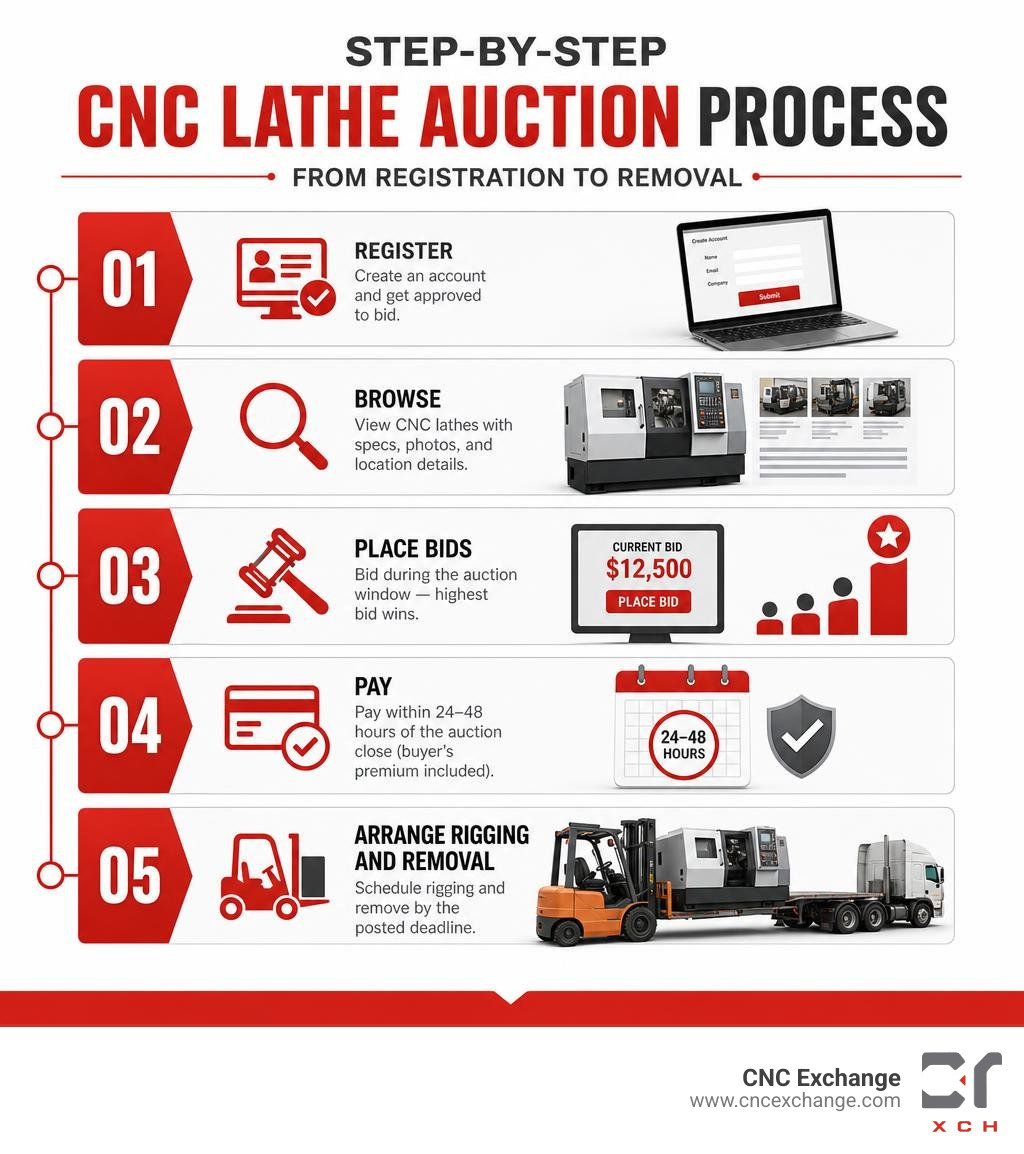
A used CNC lathe auction is one of the fastest ways to acquire professional-grade turning equipment at a fraction of new-machine prices. If you want the short version of how it works:
- Register on an auction platform and get approved to bid
- Browse listings for CNC lathes with specs, photos, and location details
- Place bids during the auction window — highest bid wins
- Pay within 24–48 hours of the auction close (buyer's premium included)
- Arrange rigging and removal by the posted deadline
That's the core process. Everything else is detail — and the details matter a lot when you're spending serious money on industrial equipment.
For manufacturing business owners, the math is hard to ignore. New CNC lathes from brands like Mazak, Okuma, or Haas can cost $100,000 or more. The used auction market regularly surfaces the same equipment — sometimes only a few years old — at dramatically lower prices. Facility closures, corporate liquidations, and shop downsizing all push quality machines onto the auction block every month.
But bidding blind is how buyers get burned. Buyer's premiums, rigging costs, removal deadlines, and "as-is" sale terms can turn a great deal into a costly headache if you're not prepared.
This guide walks you through everything you need to bid confidently — from understanding auction formats to evaluating machine condition to calculating your true total cost.
Navigating a Used CNC Lathe Auction: How It Works
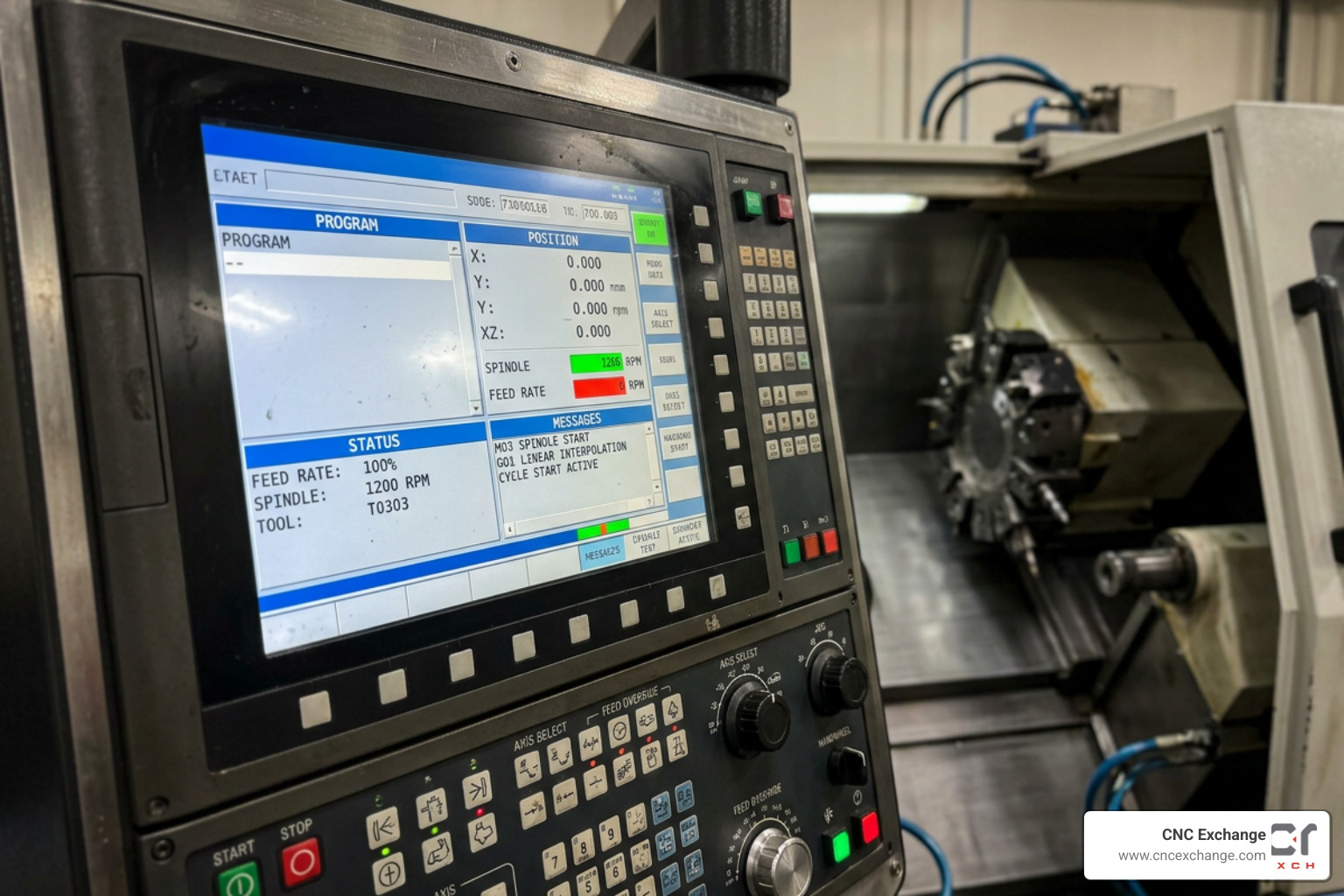
Participating in a used cnc lathe auction can feel a bit like stepping onto a high-speed digital trading floor. While traditional auctions used to require standing in a crowded, noisy warehouse, today’s industrial marketplace is largely digital. Through online platforms, you can bid on machinery located across the country right from your office in Illinois.
When you participate in CNC Lathe Auctions, you will encounter two primary formats: timed online auctions and live webcasts. Timed auctions run for a set period (usually a week or two), with lots closing sequentially on the final day. Live webcasts, on the other hand, feature a real-time auctioneer selling lots sequentially online, allowing you to bid live via your computer.
Consignment sales also play a major role in these events. Often, shops looking to upgrade their inventory will consign individual machines to an open auction, combining their surplus with equipment from other facilities to attract a larger pool of motivated buyers.
What to Expect in a Used CNC Lathe Auction
If you are new to the online bidding scene, the registration process is your first hurdle. You cannot simply log in and start bidding thousands of dollars immediately. Auction platforms require you to register at least 24 to 48 hours in advance. This gives the auction coordinators time to verify your business credentials, contact details, and sometimes request a credit card authorization or bank letter of guarantee.
Once approved, you need to understand the rules of engagement:
- Bidding Increments: Bids rise by pre-determined steps (for example, raising by $250 once the price exceeds $5,000, or by $1,000 once it crosses $20,000).
- Dual-Synced Platforms: Many high-profile machinery sales run on dual-synced platforms. This means bids placed on one industry portal are instantly synchronized with another major bidding network, ensuring maximum visibility and competition.
- Auto-Extend / Soft Close: To prevent "bid sniping" (where someone places a bid in the last second to steal the win), most auctions use a soft close. If a bid is placed in the final few minutes of a lot, the countdown timer resets by an extra 3 to 5 minutes, giving everyone a fair chance to respond.
Tips for Winning a Used CNC Lathe Auction
Winning a high-quality machine tool takes strategy, discipline, and a cool head. It is incredibly easy to get swept up in the competitive spirit and overbid. To keep your balance (and your budget) intact, follow these battle-tested strategies:
- Set a Hard Maximum Bid Limit: Before the bidding starts, calculate your absolute maximum walk-away price. Factor in the buyer's premium, rigging, and transport costs. Write this number down and stick to it.
- Prep Your Logistics Early: Do not wait until you win to call a rigger. Get a shipping and rigging estimate beforehand so you know exactly how much "wiggle room" you have in your budget.
- Avoid Emotional Bidding: Treat the auction like a cold, analytical business transaction. If the price goes one dollar over your limit, let it go. There will always be another auction.
- Monitor the Auction Close Actively: While auto-bids are convenient, being active during the final hour allows you to react to bidding patterns and make calculated decisions in real time.
Types of CNC Lathes Available at Auction

The variety of machinery available at a used cnc lathe auction is vast. Whether you run a high-volume production shop or a small prototype facility, you can find everything from simple 2-axis chucker lathes to massive multi-axis turning centers with sub-spindles and live tooling.
Understanding the differences between these configurations ensures you bid on a machine that aligns perfectly with your production requirements.
| Lathe Type | Best Used For | Key Features |
|---|---|---|
| 2-Axis CNC Lathes | Basic turning, prototyping, short production runs | X and Z axes, cost-effective, simple setup |
| Multi-Axis Turning Centers | Complex parts, single-setup machining, high precision | Live tooling, Y-axis, sub-spindle capabilities |
| Swiss-Type Automatic Screw Machines | Long, slender, high-precision small parts | Sliding headstock, guide bushing, ultra-fast cycle times |
Standard CNC Lathes and Turning Centers
Standard turning centers are the workhorses of the machining world. They range from simple, highly accessible flatbed models to heavy-duty slant-bed machines capable of ripping through tough materials day in and day out.
If you are browsing upcoming auction catalogs, you are highly likely to encounter these reliable models:
- Mori Seiki ZL-25MC 1000 CNC Lathe: A legendary heavy-duty machine featuring a 4-axis configuration with live tooling, perfect for aggressive metal removal and complex turning profiles.
- Daewoo Puma 230 MSC CNC Lathe: Known for its rigid slant-bed construction and reliable control interface, making it a favorite for mid-sized job shops.
- Okuma LOC-650 CNC Lathe: Built specifically for heavy-duty, large-diameter work (often utilized in the oil and gas or heavy industrial sectors), featuring Okuma's famously rigid spindle design.
- Mazak QTN-250MSY CNC Lathe: A highly versatile multi-axis turning center equipped with a milling spindle (Y-axis), sub-spindle, and live tooling to complete complex parts in a single operation.
- Haas TL-15 CNC Lathe: An incredibly popular dual-spindle turning center that offers a compact footprint and user-friendly Haas controls, perfect for shops taking their first step into automated turning.
- Doosan Puma TT1800SY 5-Axis CNC Lathe: A high-productivity, twin-spindle, twin-turret turning center designed for complex, high-volume manufacturing.
Automatic Screw Machines and Swiss-Type Lathes
For shops focused on high-precision, small-diameter parts—such as medical devices, aerospace fasteners, or complex electronics—automatic screw machines and Swiss-type lathes are absolute game-changers. These machines are designed to run unattended, feeding bar stock continuously to spit out completed parts by the thousands.
Miyano is a dominant name in this category, and their robust, box-way machines are highly sought after at auction. Keep an eye out for these high-performance models:
- Miyano BND-42S2 Automatic Screw Machine & Miyano BND-34S3L Automatic Screw Machine: Exceptional sub-spindle machines designed for high-precision turning with rapid cycle times.
- Miyano BND-51T Automatic Screw Machine: Features a heavy-duty turret design capable of handling larger bar capacities up to 51mm.
- Miyano BND-34S2 Automatic Screw Machine & Miyano BND-34S5 Automatic Screw Machine: Versatile workhorses engineered to deliver incredibly tight tolerances over long production runs.
- Miyano BNC-34S Automatic Screw Machine & Miyano BNC-34S Automatic Screw Machine (Alternative Listing): Compact, highly efficient chucker and bar machines that fit perfectly in smaller footprints.
- Miyano ABX-64SY Automatic Screw Machine: A multi-axis turning masterpiece featuring upper and lower turrets with Y-axis capabilities for complex, heavy-duty processing.
- Miyano BND-51S CNC Lathe: Combines the rigidity of a traditional CNC lathe with the speed of an automatic screw machine.
- Miyano BNJ-42S CNC Lathe: Features overlapping control technology on the main and sub-spindles to shave precious seconds off your cycle times.
- Miyano BND-20S5 Automatic Screw Machine: Designed for high-speed, ultra-precise processing of smaller-diameter bar stock.
Evaluating Machine Condition and Specifications
Purchasing a machine tool from an auction means buying it "as-is, where-is." This means there is no return policy, no warranty, and no customer service line to call if the machine arrives with a blown spindle. Therefore, a thorough Used CNC Lathe Inspection is the single most critical step in your buying journey.
When evaluating a listing, keep this inspection checklist on hand:
- Verify Serial Numbers and Build Dates: Check the physical ID plate on the machine. Sometimes, a listing may state a machine is a 2018 model, but the serial number reveals it was actually manufactured in 2014.
- Evaluate the Control System: Is it a Fanuc, Mazatrol, Haas, or Okuma control? Ensure the control software is still supported and that replacement parts are readily available. An outdated, proprietary control system can turn a cheap lathe into an expensive paperweight if a main board fails.
- Check Spindle and Cutting Hours: Just like a car's odometer, a CNC's "spindle on" or "cutting time" hours tell the true story of its workload. A machine with 3,000 cutting hours is practically new; one with 45,000 cutting hours has lived a long, hard life and may be due for a spindle rebuild.
- Examine Tooling and Accessories: Does the lathe come with a chip conveyor, a bar feeder, tool holders, or a collet chuck? These accessories can add thousands of dollars in value. If the auction lot includes a "rack of tooling," look closely at the photos to see what is actually salvageable.
- Look for Maintenance Records: If the auction is a facility liquidation, the seller might have service logs attached to the machine. Look for evidence of regular way-lube filter changes, spindle replacements, or ball screw repairs.
Whenever possible, schedule a physical inspection. Most auctions offer a designated "preview day" where you can visit the facility, power up the machines, and sometimes even watch them run under power. If you cannot make the trip to the site, consider hiring a local CNC technician to perform an independent inspection on your behalf.
Understanding the True Cost: Fees, Rigging, and Logistics
The hammer price at an auction is never the final amount on your invoice. If you bid $20,000 and win, you cannot simply write a check for $20,000 and hook the lathe to the back of your pickup truck. To avoid unpleasant financial surprises, you must understand the complete cost structure of a machinery purchase.
Let's break down the additional expenses you must account for:
- Buyer's Premium (BP): This is a standard fee charged by the auctioneer to cover administrative costs. In industrial machinery auctions, the buyer's premium typically ranges from 10% to 20% of the hammer price. If you win a lathe for $20,000 with an 18% buyer's premium, an additional $3,600 is instantly added to your bill.
- Sales Tax: Unless you have a valid tax-exempt certificate or a manufacturing exemption, local sales tax will be applied to your purchase. Pro-Tip for our local partners: In Illinois, machinery and equipment used directly in the manufacturing process may be exempt from state sales tax, provided you submit the proper documentation (such as Form ST-587) prior to invoicing.
- Rigging and Removal: You are not allowed to bring your own hand tools and forklift onto an auction site to move a 10,000-pound lathe. Auction houses require you to hire a licensed, insured, and pre-approved professional rigging company. The rigger will disconnect the power, prep the machine, lift it onto a flatbed trailer, and secure it for transport. Rigging a standard CNC lathe typically costs between $1,500 and $5,000 depending on the complexity of the move.
- Freight and Shipping: Transporting heavy machinery requires specialized flatbed or step-deck trucking. Depending on the distance from the auction site to your shop, freight costs can add several hundred to several thousand dollars to your total investment.
- Removal Deadlines: Auctions operate on strict timelines. You will typically have a window of 10 to 14 days after the auction closes to pay for and remove your machinery. If you miss the deadline, you may face steep daily storage fees, or the auctioneer may declare the item abandoned—meaning you lose both the machine and your money.
If you are planning a shop upgrade or need to clear out older assets to make room for your new purchase, exploring CNC Machinery Liquidation options is an excellent way to offset these upfront logistics costs.
Frequently Asked Questions about CNC Lathe Auctions
What is the typical buyer's premium at a used cnc lathe auction?
The typical buyer's premium at an industrial machinery auction ranges from 15% to 20% for online bidding, though some local or manual auctions may charge as low as 10%. Always check the specific "Terms and Conditions" tab on the auction listing before placing your first bid, as this fee is non-negotiable and will be added directly to your final invoice.
Can I inspect a used cnc lathe auction item in person before bidding?
Yes! In fact, we highly recommend it. Most reputable auctioneers schedule a physical preview day (usually a day or two before the bidding closes) where buyers can inspect the machinery. If the machine is located far away, you can often contact the auction coordinator to ask for video footage of the machine running, close-up photos of the ways, or hire a local third-party technician to inspect the machine for you.
Who is responsible for rigging and shipping won machinery?
The buyer is entirely responsible for all rigging, loading, and transportation logistics. You must coordinate with an approved professional rigging company that carries sufficient liability insurance to work on the auction site. The auctioneer will provide a list of recommended local riggers who are already familiar with the facility's layout and safety requirements.
Conclusion
Navigating a used cnc lathe auction successfully requires a blend of preparation, technical knowledge, and financial discipline. By understanding how online bidding platforms operate, identifying the exact machine specifications your shop needs, and accounting for the "hidden" costs of rigging and transportation, you can secure world-class manufacturing equipment at an exceptional value.
At CNC Exchange, we make the process of upgrading your manufacturing floor simple, transparent, and secure. Headquartered in Prospect Heights, Illinois, we are dedicated to helping machine shops achieve fair market value for their surplus equipment while sourcing high-quality, reliable machinery for their next big project.
Ready to find your next machine tool with complete peace of mind? Talk to Our Machine Tool Experts Today or visit our headquarters at CNC Exchange - Prospect Heights to learn how we can support your business growth. If you are ready to explore our current inventory of premium turning centers, mills, and fabrication gear, Browse CNC Machinery for Sale today!