
Overview of Industrial Metal CNC Machines
Metal CNC machines fall into four main categories, each suited to different production needs. Vertical machining centers provide the heavy cast iron rigidity and high torque required for ferrous alloys, carbon steels, and titanium. Metal CNC routers handle non-ferrous soft metals such as 6061 aluminum, brass, and copper at high spindle speeds for large-format sheet work. Multi-axis machining centers and turning centers produce complex contours and cylindrical components with minimal setups. Industrial fiber lasers profile flat sheet and tube stock at extreme speeds without mechanical tool wear. Modern computer numerical control began taking shape in 1952, when Richard Kegg, working alongside pioneers John Parsons and Frank Stulen, helped develop the first operational CNC milling machine. By 1981, fully automated, computerized numerical control systems became widespread across production floors. Today, standard programming uses standardized G-code to direct multi-axis cutting tools, servos, and linear drives with exceptional repeatability. Whether operating a specialized production line or partnering with a precision CNC machining company, matching the right machine architecture to your raw materials is essential for maintaining productivity.
CNC Mills and Vertical Machining Centers
When heavy stock removal and tight dimensional tolerances are paramount, traditional subtractive milling remains the gold standard. Heavy cast iron frames give vertical machining centers the physical mass required to absorb high cutting forces when machining ferrous alloys, carbon steels, and titanium. Units such as high-performance vertical mill models provide high-torque geared or inline spindles that excel at low-RPM pocketing, face milling, and deep hole drilling where structural rigidity prevents chatter and tool breakage.
Soft Metal CNC Machines for Precision Routing
Metal CNC routers bridge the gap between large-format sheet processing and light milling. While standard woodworking routers lack the structural mass and cooling systems needed for metals, dedicated soft metal routers feature reinforced gantries and specialized mist lubrication. These machines excel at cutting non-ferrous metals like 6061 aluminum plate, naval brass, and tellurium copper. Equipped with high-speed spindles and vacuum or T-slot worktables, they rapidly produce custom signage, architectural panels, and electronics enclosures without requiring the capital investment of a full-scale vertical machining center.
Multi-Axis Metal CNC Machines for Complex Geometries
Components requiring continuous contouring across multiple faces demand advanced multi-axis kinematics. Modern 5-axis CNC machining configurations allow the cutting tool to remain normal to intricate 3D surfaces, dramatically reducing setups for complex aerospace and medical components. Similarly, shops handling cylindrical stock benefit from incorporating used CNC lathe machines or investing in multi-tasking multi-axis turning centers that integrate live milling tooling with dual-spindle turning capabilities.
Industrial Fiber Lasers and Sheet Profile Cutters
For two-dimensional sheet profiling, high-power fiber laser cutting machines deliver unmatched speed and material utilization. Systems utilizing 12 kW to 40 kW solid-state fiber laser sources can slice thin gauge sheet at speeds reaching 80 to 100 m/min, while handling heavy carbon steel up to 50 mm thick using oxygen assist gas. Large-scale structural units handle expansive plates up to 13,000 × 3,200 mm, tubes, and structural profiles, offering high efficiency for heavy industrial fabrication and rigid structural fabrication without mechanical tool wear.
Structural Rigidity, Spindle Power, and Critical Specifications
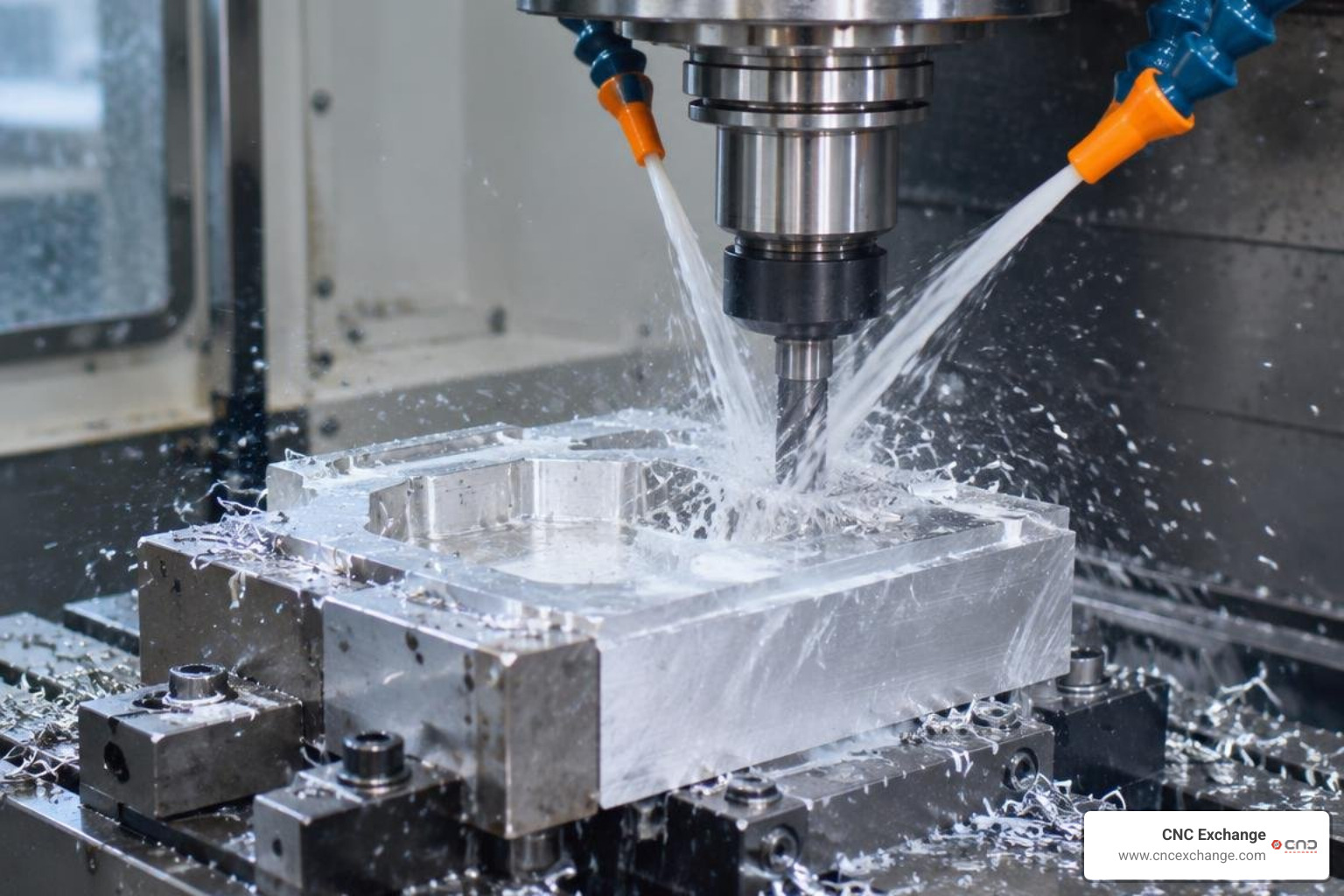
A machine tool's structural integrity directly dictates the surface finish, tool life, and geometric accuracy it can achieve under load. Premium industrial units rely on stress-relieved cast iron or tubular steel weldments filled with mineral casting polymers to dampen harmonic resonance. Meeting rigorous high-precision machine shop standards requires robust linear guideways, precision-ground ball screws, and dual-supported gantries capable of holding a positioning accuracy of ±0.1 mm and repositioning repeatability within ±0.05 mm.
Spindle Selection and Torque Dynamics
Selecting the correct spindle configuration depends on the balance between rotational speed and cutting torque:
- High-Speed Routing Spindles: Operating from 18,000 to 24,000+ RPM, these air- or liquid-cooled spindles excel with small-diameter carbide end mills in non-ferrous soft metals. They rely on ceramic hybrid bearings to manage thermal rise at high angular velocities.
- High-Torque Milling Spindles: Operating between 6,000 and 12,000 RPM, standard vertical machining centers use robust BT40, CAT40, or HSK-63 tool tapers. These spindles generate the low-end torque necessary for heavy chip loads in carbon steel and tool steel.
- Tool Changing Capabilities: Automated tool changers (carousels or side-mount arms) minimize non-cut time, allowing seamless transitions from roughing hog mills to fine ball-nose finishing tools.
Thermal Stability and Coolant Management
Friction during metal cutting generates intense heat at the shear zone. Without proper thermal management, cutting tools experience rapid adhesive wear, and workpieces suffer dimensional drift from thermal expansion.
For soft metals like aluminum, a high-pressure minimum quantity lubrication (MQL) or air-mist system prevents chips from welding to the cutting flutes. Ferrous metals and deep cavity milling require full flood coolant systems paired with chip conveyors to maintain stable core temperatures and ensure effective chip evacuation. In fiber laser cutting, precision assist gases (oxygen for exothermic thick-plate cutting, nitrogen or high-pressure dry air for clean, burr-free edges) prevent dross buildup along the kerf.
Comprehensive Comparison: Routers, Mills, and Fiber Lasers
| Machine Type | Ideal Materials | Best Part Geometry | Typical Accuracy | Primary Advantages | Main Operational Limitations |
|---|---|---|---|---|---|
| Metal CNC Router | Aluminum, brass, copper, thin sheets | Large 2.5D panels, signage, plate cutouts | ±0.05 to ±0.1 mm | Large work envelope, lower cost, high RPM | Limited z-travel, low torque for ferrous steels |
| Vertical Machining Center (VMC) | Tool steel, carbon steel, titanium, aluminum | Complex 3D solids, prismatic parts, deep pockets | ±0.005 to ±0.01 mm | High torque, extreme rigidity, tight tolerances | Smaller work bed area, higher capital investment |
| Fiber Laser Cutter | Carbon steel, stainless, aluminum, copper | 2D flat sheets, profiles, tubing geometry | ±0.05 to ±0.1 mm | Extreme cutting speeds, zero tool wear, high nesting efficiency | Restricted to profiling/cutting; cannot mill 3D contours |
Workshop Setup, Safety Protocols, and Total Cost of Ownership
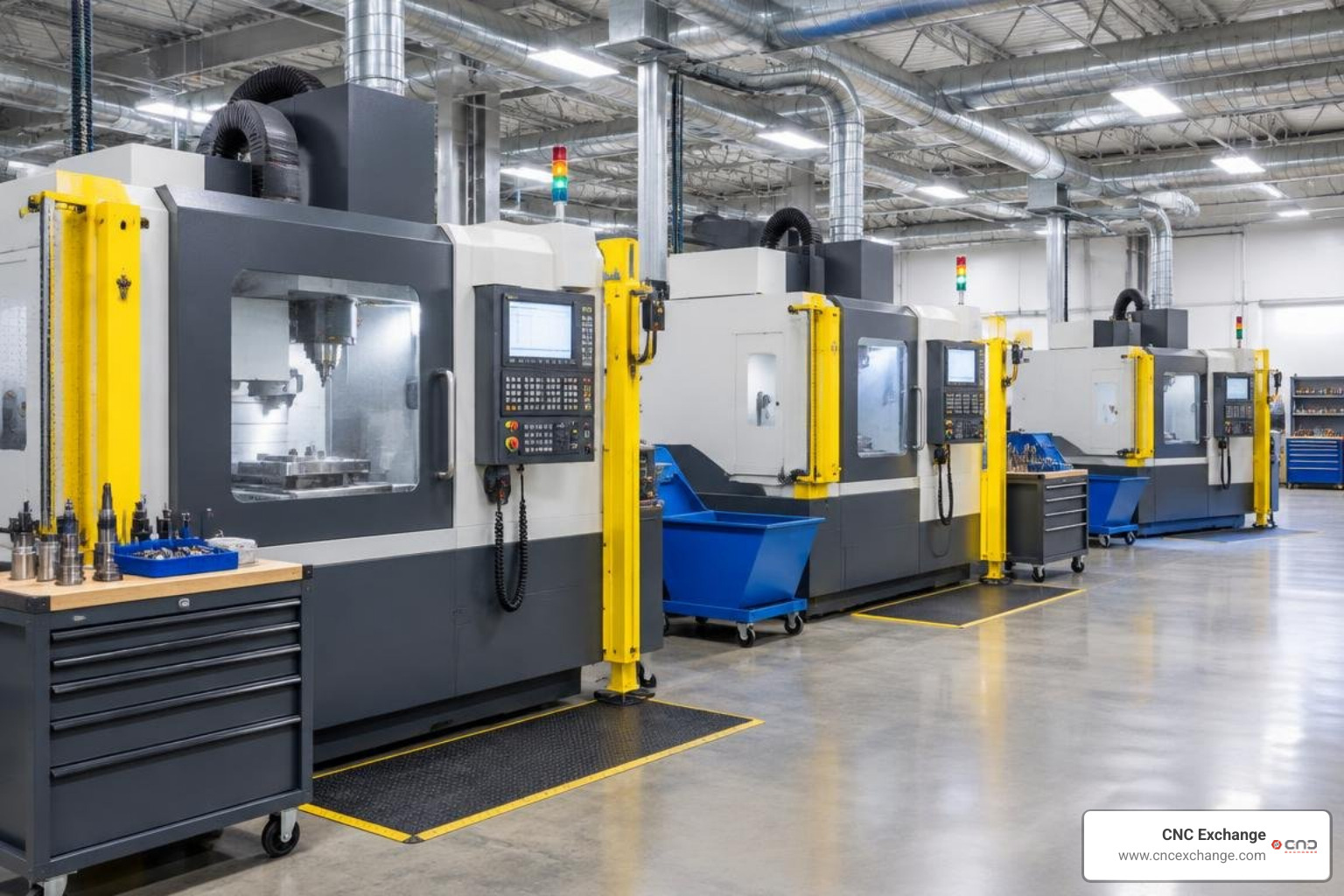
Operating industrial cutting equipment requires careful site preparation and an ongoing commitment to safety. Heavy machining centers demand reinforced, vibration-isolated concrete foundations (often 6 to 8 inches minimum) to prevent structural settling from skewing calibration. Facilities must supply clean, moisture-free compressed air alongside balanced three-phase electrical power (typically 208V, 230V, or 480V) to handle the load swings of rapid axis accelerations and spindle starts. When evaluating industrial CNC machinery for sale, factoring in electrical infrastructure, industrial chillers, and mist collection systems ensures an accurate total cost of ownership.
Pricing Tiers and Acquisition Budgets
Metal cutting equipment spans a wide range of investment levels depending on capacity, power, and automation:
- Standard Soft Metal Routers ($4,000–$5,000): Entry-level desktop and light-industrial frames suitable for prototyping, engraving, and light aluminum sheet processing.
- Heavy-Duty Production Routers ($6,000–$7,000): Reinforced gantry systems with mist lubrication, improved stepper or hybrid servo drives, and expanded bed sizes.
- Advanced Routing Platforms ($11,000–$12,000+): High-speed production units equipped with industrial multi-tool changers, vacuum tables, and closed-loop digital servos.
- Industrial Machining Centers & Multi-Kilowatt Lasers ($40,000 to $250,000+): Full-scale production equipment featuring automated pallet changers, high-end CNC controllers, and high-rigidity cast iron bases.
Essential Safety Enclosures and Workshop Infrastructure
Operator safety requires layered structural protections:
- Laser Enclosures: High-power fiber lasers require fully enclosed, interlocked Class 1 cabins with specialized optical viewing glass to protect personnel from harmful diffuse reflections.
- Physical Barriers & Interlocks: Interlocked access doors, emergency stop circuits, and optical light curtains instantly halt servo drives if an operator enters the cutting envelope during operation.
- Ventilation & Chip Containment: High-volume mist extractors and dust collection systems remove airborne atomized coolants and fine particulates, maintaining clean shop air.
- Personal Protective Equipment (PPE): Operators must consistently wear ANSI-approved eye protection, steel-toe footwear, and hearing protection while avoiding loose clothing or gloves around rotating spindles.
Frequently Asked Questions
How accurate are metal CNC routers compared to industrial mills?
Industrial vertical machining centers achieve tighter tolerances (typically within ±0.005 mm to ±0.01 mm) thanks to heavy cast iron frames, thermal compensation algorithms, and high-rigidity ball screws. Metal CNC routers generally achieve tolerances between ±0.05 mm and ±0.1 mm. While routers are exceptionally precise for engraving, panel cutting, and face profiling, the structural compliance of an elevated gantry allows slight deflection under heavy cutting loads compared to a solid cast iron mill.
What soft metals are best suited for routing and light milling?
The most machinable soft metals for routing are non-ferrous alloys with good chip-breaking properties:
- 6061-T6 Aluminum: Delivers an excellent balance of strength, corrosion resistance, and machinability with minimal tool loading when paired with mist coolant.
- 360 Free-Machining Brass: Produces clean, brittle chips with minimal tool wear, making it ideal for precision engraving and decorative hardware.
- 145 Tellurium Copper: Offers high electrical and thermal conductivity while breaking chips far better than pure electrolytic copper.
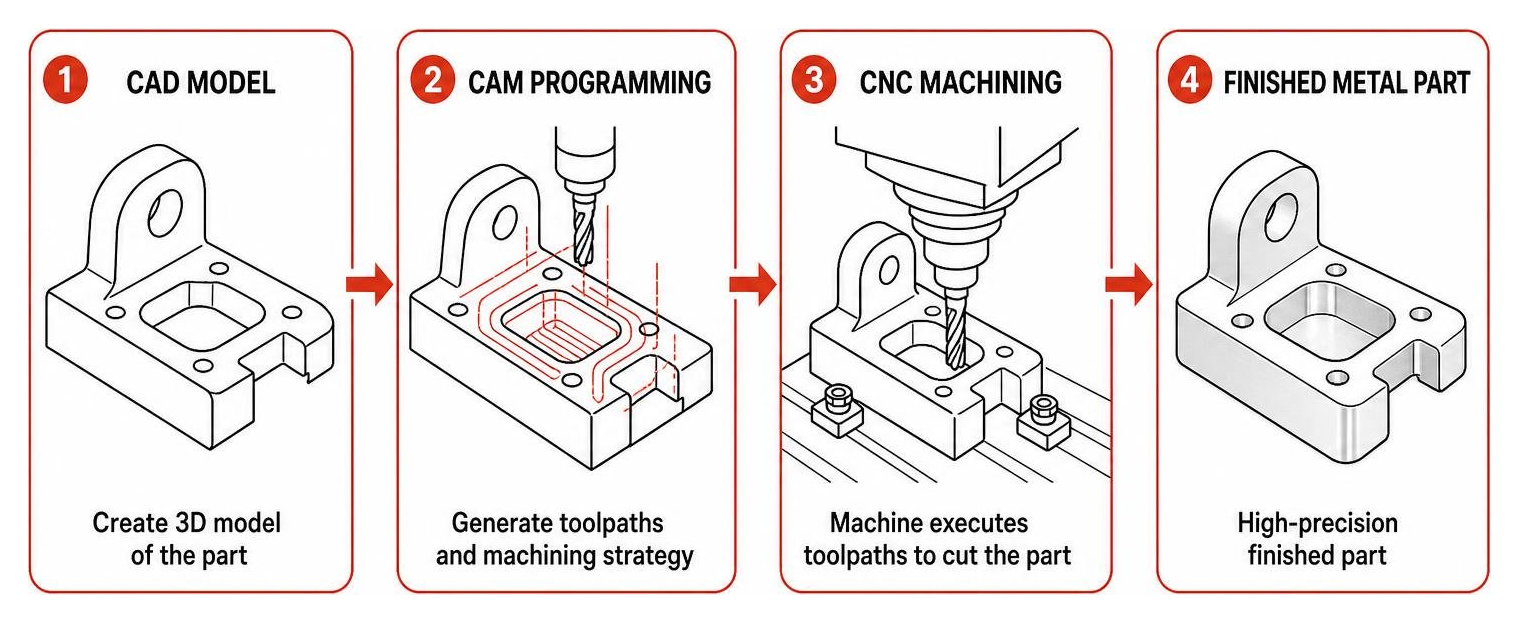
What is the standard workflow from digital design to finished metal part?
Transforming raw metal stock into a finished part follows a proven five-step progression:
- CAD Modeling: Construct the solid 3D geometry or 2D vector profiles using computer-aided design software.
- CAM Programming: Generate optimal toolpaths, selecting cutting speeds, feed rates, step-overs, and entry strategies based on material properties.
- Post-Processing: Convert toolpaths into machine-specific standardized G-code.
- Machine Setup: Secure raw material with clamps or vacuum fixtures, establish coordinate work offsets (WCS), and verify tool lengths via a tool setter.
- Execution & Inspection: Run the G-code program with active coolant, followed by dimensional verification using precision calipers, micrometers, or coordinate measuring machines (CMM).
Conclusion
Choosing the right metal CNC machine involves balancing your primary workpiece materials, required geometric complexity, tolerance thresholds, and overall production volume. Whether you need a high-speed router for non-ferrous sheet fabrication, a multi-axis vertical machining center for prismatic steel components, or an industrial fiber laser for rapid sheet profiling, matching machine capabilities to your shop's workflow drives long-term manufacturing profitability.
Ready to upgrade your shop's cutting capabilities or liquidate surplus machinery at fair market value? Explore our platform to browse available CNC equipment and connect with industrial machine specialists today.