
Why a CNC Second Hand Machine Could Be the Smartest Investment You Make in 2026
Buying a cnc second hand machine is one of the fastest ways for a manufacturing business to scale production without draining its capital budget. Here's a quick-reference snapshot to answer your most pressing questions right away:
Top reasons to buy a used CNC machine in 2026:
- Save 40-60% compared to buying new
- Well-maintained machines last 20-30 years — a 10-year-old unit still has plenty of life
- Depreciation slows after year 5, so you get strong value for money
- Over 70% of SMEs use used CNC equipment as their entry point into automated machining
- Reliable dealers (like CNC Exchange) offer inspected, demo-ready machines you can see before you buy
The global CNC machine market is on track to hit $128.86 billion by 2028, and the used segment is a significant and growing slice of that. For small and mid-sized manufacturers, the pressure is real — new equipment costs are high, lead times are long, and production demands don't wait.
A pre-owned CNC machine, sourced carefully, solves all three problems at once.
I'm Jared Gray, and with over 12 years of hands-on experience buying, selling, and brokering cnc second hand machines across global markets, I've helped hundreds of businesses find the right used equipment at the right price. In this guide, I'll walk you through exactly what to look for — and where to find it.
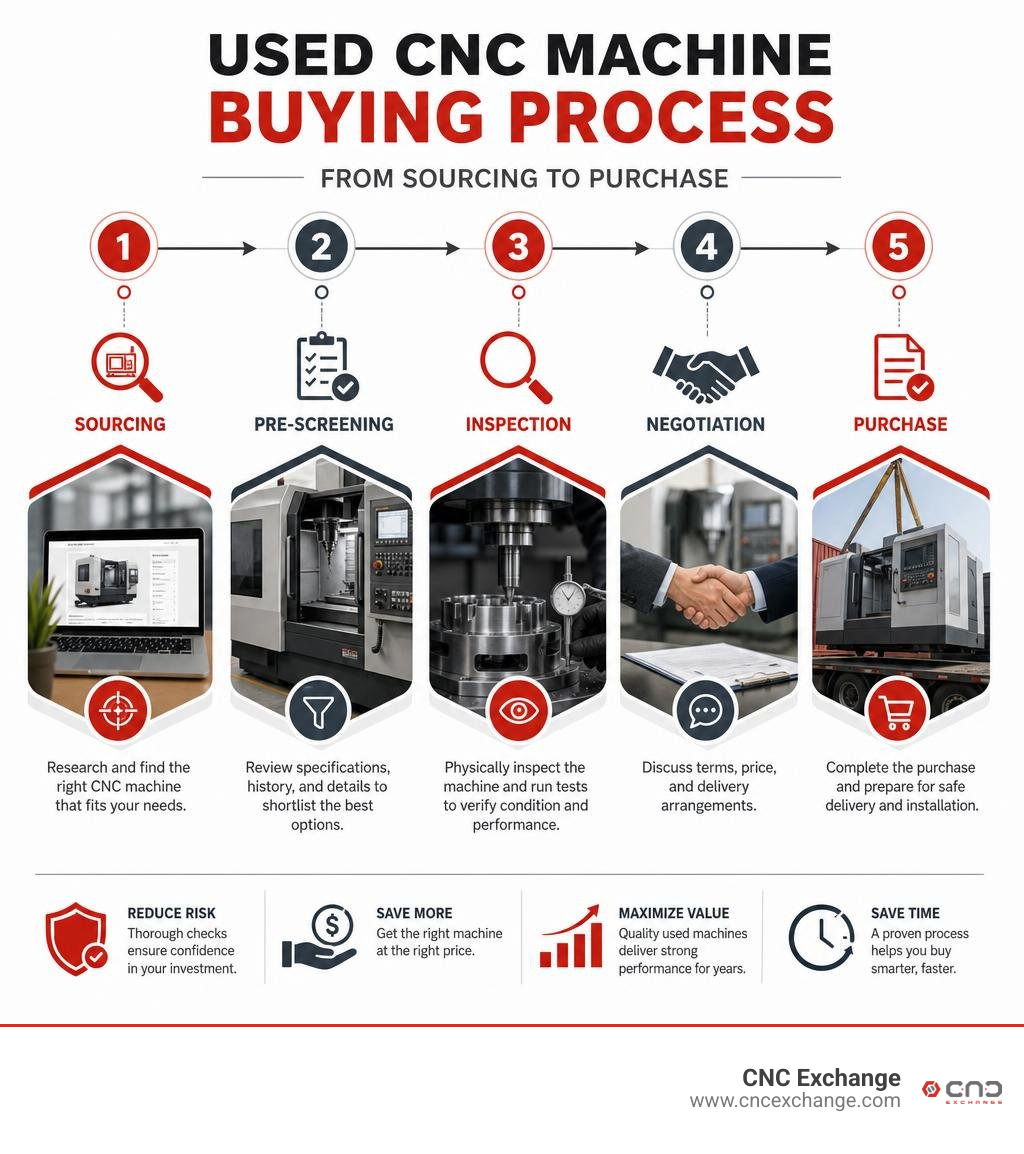
Why Buy a CNC Second Hand Machine in 2026?
As we navigate the manufacturing landscape of 2026, the economic arguments for purchasing pre-owned machinery have never been stronger. The primary driver is, of course, capital preservation. Sourcing a high-quality cnc second hand machine allows businesses to save an impressive 40% to 60% compared to the cost of purchasing a brand-new equivalent model. For a small-to-medium enterprise (SME) or a rapidly growing machine shop, these savings can be immediately reallocated toward tooling, software upgrades, or hiring skilled operators.
Another major factor is the predictable depreciation curve of industrial machinery. Much like a new car, a brand-new CNC machine suffers its steepest drop in value early on. Typically, the resale value of CNC machines depreciates by 30% to 40% in the first five years of operation. After this initial dip, the depreciation curve flattens and stabilizes. By purchasing a machine that is five to ten years old, you let the original owner absorb that heavy initial loss, allowing you to acquire a highly capable asset at its value-retention sweet spot.
Furthermore, industrial CNC machinery is engineered to last. With a robust cast-iron frame and premium linear guides, the average lifespan of a well-maintained CNC machine ranges from 20 to 30 years. This means that a 10-to-15-year-old machine is not "old" in terms of its mechanical utility; rather, it represents a highly reliable, mid-life asset that can deliver tight tolerances for another decade or more if maintained properly.
To put this into perspective, let us look at how the costs stack up when comparing a new CNC setup versus a pre-owned alternative:
| Cost Component | New CNC Machine | Used CNC Machine (5-10 Years Old) |
|---|---|---|
| Initial Purchase Price | 100% (Full Retail Price) | 40% - 60% of original retail price |
| First 5-Year Depreciation | 30% - 40% loss of value | Highly stable, minimal further depreciation |
| Lead Time to Delivery | 3 to 9 months (factory backlog) | Immediate shipment and installation |
| Ancillary Costs (Rigging/Setup) | Included or extra | Extra (comparable to new) |
| Software & Tooling Compatibility | Cutting-edge (may require new tooling) | Often compatible with legacy tooling |
By choosing pre-owned machinery, you can bypass the frustrating lead times associated with factory-ordered equipment. When a major contract is on the line, waiting nine months for a machine to arrive from overseas is simply not an option. A used machine can be rigged, shipped, installed, and chips can be flying in a matter of weeks. To explore how adding versatile machinery can transform your production floor, check out our Manufacturing Page to see how we help businesses scale seamlessly.
Key Factors to Evaluate Before Purchasing
Buying a cnc second hand machine requires a balance of mechanical inspection, software evaluation, and historical research. You cannot rely solely on a fresh coat of paint; you must dig deep into how the machine was treated by its previous owners.
Before committing your hard-earned capital, we recommend focusing on three core pillars of machine evaluation:
- Machine History and Service Logs: A machine with a clear paper trail is always a safer bet than one with missing records. Request documentation on spindle rebuilds, ball screw replacements, and regular fluid changes.
- Tooling and Spindle Integrity: The condition of the spindle and tool changer will dictate your part quality and cycle times. Ensure you verify whether the tooling system needs immediate attention. You can read more about maintaining these components in our guide on how to Clean or Replace CNC Mill Tooling.
- Axis Configuration and Machine Type: Ensure the physical footprint and axis capabilities match your planned production. Whether you need a standard mill or a specialized turning center, understanding the mechanics is vital. For a deep dive into turning systems, read Blog Post: The Definitive Guide to CNC Lathes.
Verifying the Condition of a CNC Second Hand Machine
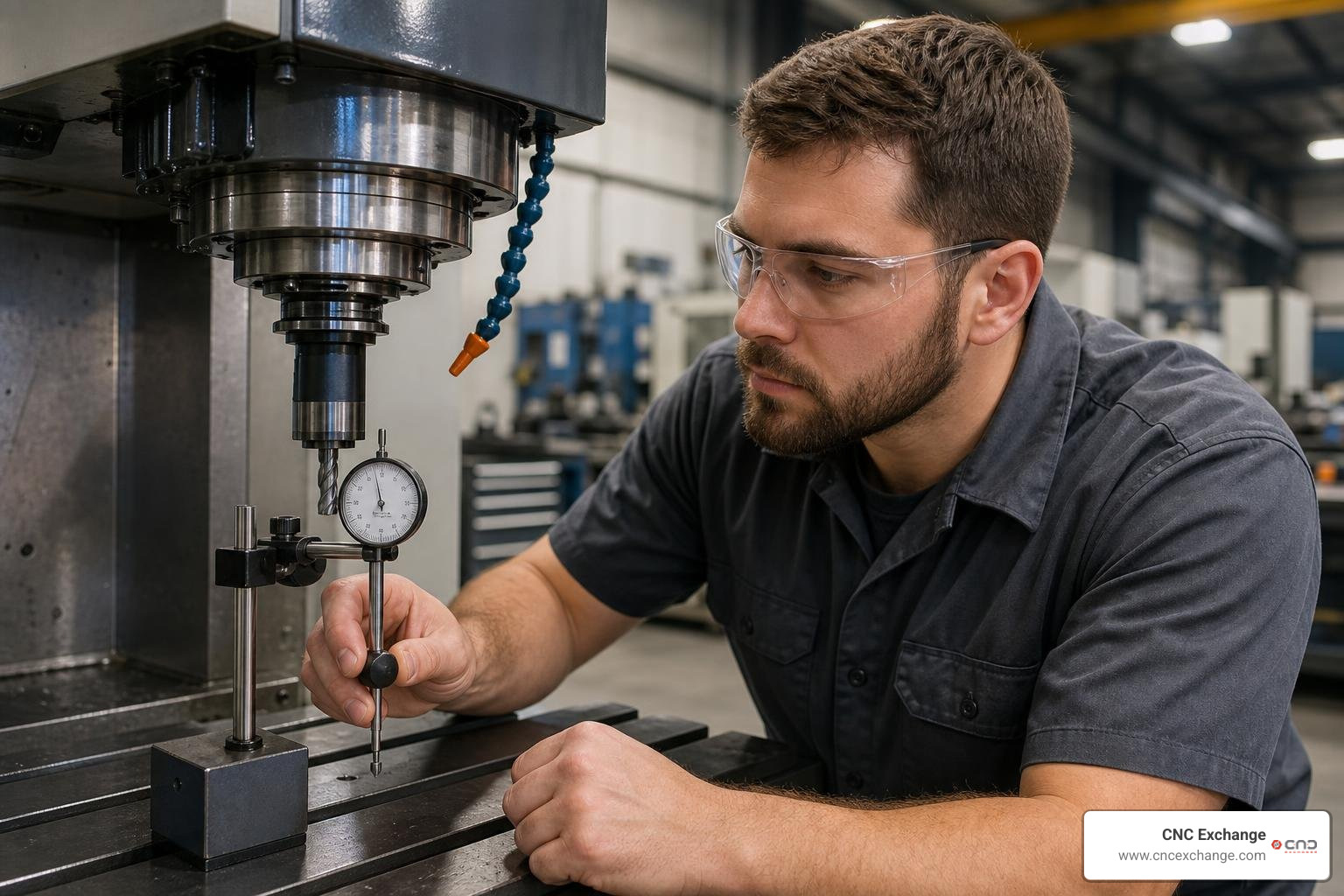
When you are on-site or working with an inspector to verify a machine's condition, there are several non-negotiable tests to run. First and foremost is checking the spindle runout using a dial indicator). Spindle runout should ideally be within a few microns; anything higher suggests worn spindle bearings, which can be incredibly expensive to replace.
Next, perform a backlash test on all axes (X, Y, and Z). Backlash occurs when there is physical play or wear in the ball screws and guide ways, leading to inaccuracies in your finished parts. While some backlash can be compensated for within the CNC controller's parameters, excessive mechanical play will require a complete ball screw rebuild.
Always request to see the machine running under power. If possible, perform a "dry run" program at maximum feed rates to listen for unusual vibrations, grinding noises, or whining from the axis servo motors. Don't forget to inspect the automatic tool changer (ATC) through several cycles to ensure smooth mechanical transitions without catching or sticking.
Software and Tooling Compatibility for Your CNC Second Hand Machine
A common pitfall when buying a cnc second hand machine is overlooking the digital side of the equation. A machine that is mechanically flawless is useless if your engineering team cannot post-process code to it.
First, look at the controller. Is it a widely supported model, such as a Fanuc, Haas, or Siemens control? Older, proprietary controllers can be incredibly difficult to service, and finding replacement boards can feel like searching for a needle in a haystack.
Ensure that your current CAD/CAM software has a reliable post-processor for the specific controller version on the used machine. If you have to pay a software vendor thousands of dollars to write a custom post-processor, it quickly eats into your initial savings. Additionally, check the communication ports. Older machines might rely on RS-232 serial ports, which may require specialized USB adapters or wireless DNC transfer boxes to interface with modern networks. If you are preparing your facility for a newly acquired machine, check out our checklist on Blog Post: Steps to Restart Your Shop to ensure a seamless integration.
Sourcing Reliable Pre-Owned CNC Equipment

Finding a reliable cnc second hand machine requires knowing where to look. Many buyers in manufacturing hubs like Bangalore search extensively for local dealers. To bridge this gap, CNC Exchange operates a dedicated international logistics pipeline directly from our headquarters in Prospect Heights, Illinois, USA, to Bangalore and surrounding industrial corridors. While local brokers can offer quick site visits, the global supply chain in 2026 means that importing well-maintained machinery from trusted US-based dealers like CNC Exchange is often the safest and most reliable route. We handle all export compliance, ocean freight, and rigging logistics, making a purchase from our Illinois warehouse as seamless as buying locally in Karnataka.
Because US manufacturing facilities tend to adhere to strict preventative maintenance schedules, buying from our US inventory and shipping to Bangalore often yields a machine in far superior mechanical condition compared to local options that have been run continuously on multi-shift schedules with minimal upkeep.
If your production calls for high-volume, multi-sided machining, you may want to focus your search on horizontal configurations. You can browse our dedicated Category: Horizontal Machining Centers to see what is currently available, or narrow down your parameters by exploring our specific inventory under Type: Horizontal Machining Centers CNC.
Mitigating Risks: Warranties, Financing, and Maintenance
Purchasing used equipment always comes with some degree of risk, but smart buyers know how to manage and mitigate those variables. The first step is understanding the terms of the sale. The vast majority of used industrial machinery is sold on an "as-is, where-is" basis. This means once the machine is rigged and loaded onto the truck, any future mechanical failures are your responsibility. However, reputable stocking dealers will sometimes offer a "30-day return privilege" or a MDNA (Machinery Dealers National Association) guarantee, which ensures the machine is mechanically sound upon arrival or can be returned for a refund.
Financing is another excellent tool for risk mitigation. Many buyers assume they must pay cash for used equipment, but specialized industrial lenders offer excellent asset-based financing and equipment leasing options. This allows you to preserve your working capital while the machine pays for itself through monthly production runs.
Once the machine arrives at your facility, establishing a strict preventative maintenance routine is your best defense against unexpected downtime. To keep your newly acquired asset running smoothly for years to come, refer to Blog Post: Prolong the Life of Your CNC Machine with These Maintenance Tips.
If you have questions about a specific machine's history, shipping logistics, or export requirements, don't hesitate to reach out to professionals who do this every day. You can Talk to Our Machine Tool Experts Today to get tailored advice for your shop's unique needs.
Frequently Asked Questions about Used CNC Machinery
What are the best CNC brands that hold their resale value?
When shopping for a cnc second hand machine, brand selection plays a massive role in long-term reliability and eventual resale value. Japanese builders like Yamazaki Mazak, Okuma, and Mori Seiki (now DMG Mori), along with American builders like Haas, are renowned for holding their value exceptionally well.
These brands are highly sought after because spare parts are readily available, and there is an abundant pool of technicians who know how to service them. If you are planning to upgrade your shop and want to sell your existing gear to fund the purchase, you can learn how to get top dollar by reading Blog Post: Maximize Value Reselling Surplus CNC Machines.
How do I arrange financing for a used CNC machine?
Financing a pre-owned CNC machine is highly straightforward through specialized equipment finance agreements (EFAs) or capital leases. Unlike traditional banks, industrial lenders understand the intrinsic value of CNC machinery and use the machine itself as collateral.
To qualify for competitive rates, lenders will typically look at your business credit history, time in business, and the age/condition of the machine. For more answers to common questions regarding purchases, transactions, and logistics, visit our comprehensive FAQs Page.
What are the most common pitfalls when buying used CNCs?
The most common pitfalls include ignoring rigging and transportation costs, buying machines with obsolete controller boards, and skipping a physical inspection. Rigging a heavy CNC machine out of a seller's facility, transporting it safely, and rigging it into your shop can easily add thousands of dollars to your total investment. Always get a firm rigging quote before finalizing your purchase budget!
Conclusion
Investing in a cnc second hand machine is one of the most effective strategies for scaling your manufacturing capabilities in 2026. By dodging heavy early-stage depreciation, bypassing long factory lead times, and sourcing from trusted dealers, your business can achieve rapid growth while maintaining a healthy bottom line.
At CNC Exchange, based in Prospect Heights, Illinois, we specialize in helping shops find the perfect balance of price, performance, and reliability. Ready to find your next workhorse? Explore our up-to-date inventory and Find Quality Used CNC Machinery Today.