
Finding CNC Machines in Illinois for Your Shop
To find the right CNC machines in Illinois, start with the parts you need to make. Match their size, material, and production volume to the machine's capacity and features. Then compare available machines by condition, inspection options, and total cost, not just asking price.
Illinois shops use CNC equipment for everything from one-off parts to repeat production. That range makes machine choice important: a good fit can reduce setup time and help your team keep up with orders, while an oversized or poorly matched machine can tie up cash.
I'm Jared Gray, and I bring more than 12 years of buying, selling, and brokering manufacturing equipment to this guide to CNC machines in Illinois.
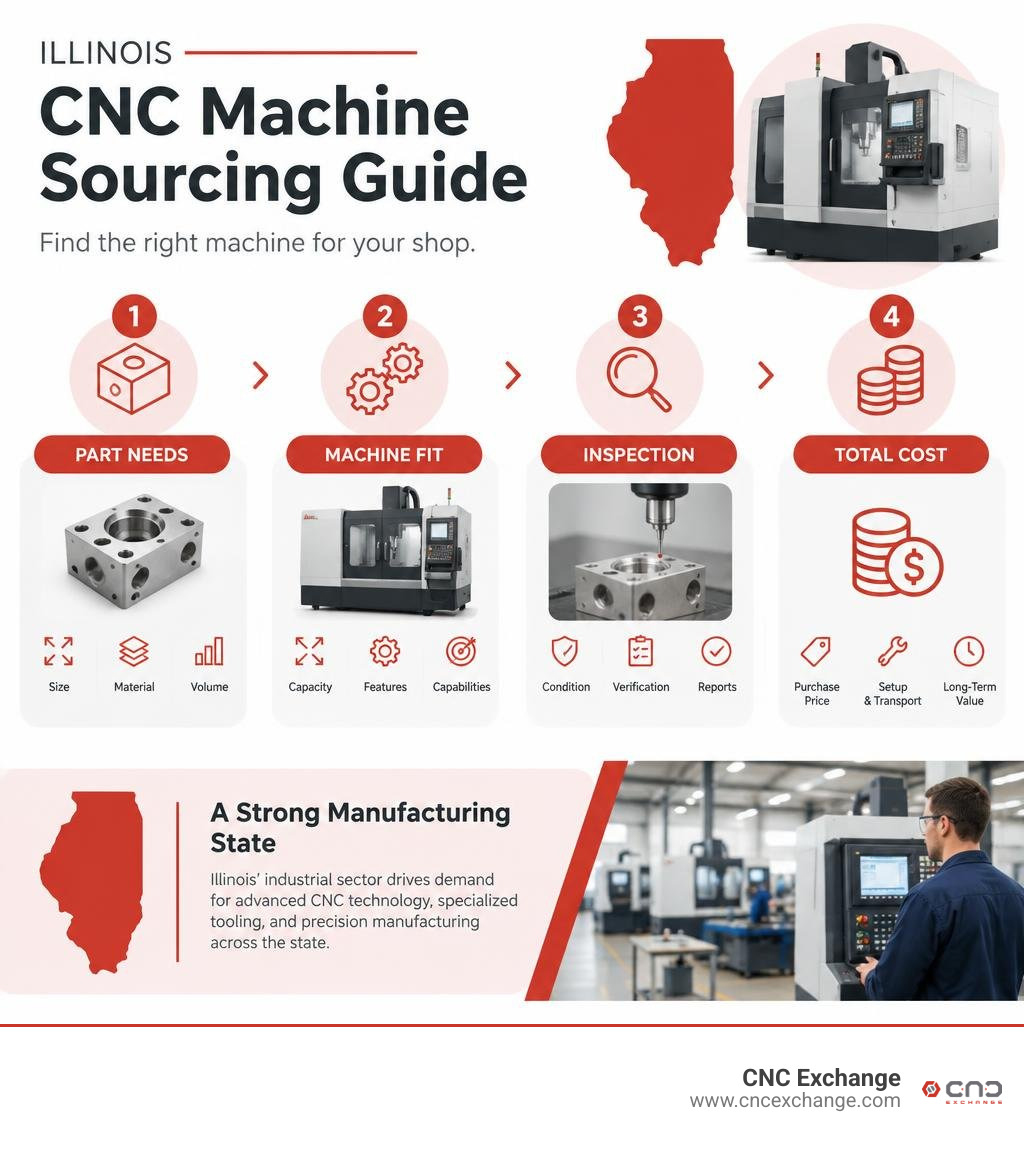
The Strategic Role and Ecosystem of CNC Machines in Illinois
Illinois holds a central position in American manufacturing. With the sixth-largest population and fifth-largest gross domestic product in the nation, the Prairie State relies heavily on industrial production. Manufacturing accounts for over 16% of Illinois' total GDP, generating steady demand for advanced metalworking technology, specialized tooling, and precision chip-making equipment.
The state's industrial footprint is powered by dense manufacturing clusters. The greater Chicago metropolitan area—including suburban hubs like Elk Grove Village, Addison, Carol Stream, Itasca, and Prospect Heights—serves as a primary center for precision metal fabrication and contract manufacturing. Across the state, directories list extensive networks of machine shops, including over 400 verified facilities on Machine Shops in Illinois and more than 860 machining vendors cataloged under CNC Machining Suppliers located in Illinois.
Beyond the Chicago metro area, Northern Illinois hubs like Rockford maintain deep roots in tool-and-die fabrication, while Central Illinois corridors around Peoria form an integrated supply chain supporting heavy equipment, earthmoving machinery, and agricultural systems. Backed by the Port of Chicago, O'Hare International Airport, and major Class I rail networks, Illinois facilities can source raw materials and deliver finished components quickly throughout North America.
Sourcing CNC Machines in Illinois for Aerospace and Defense
Aerospace and defense manufacturing in Illinois requires rigid adherence to tight tolerances, traceable materials, and strict regulatory standards like AS9100D and ITAR registration. Machining components for commercial aviation, military aircraft, defense guidance systems, and low-Earth-orbit satellites involves difficult geometries in tough materials, such as titanium, Inconel, and Hastelloy.
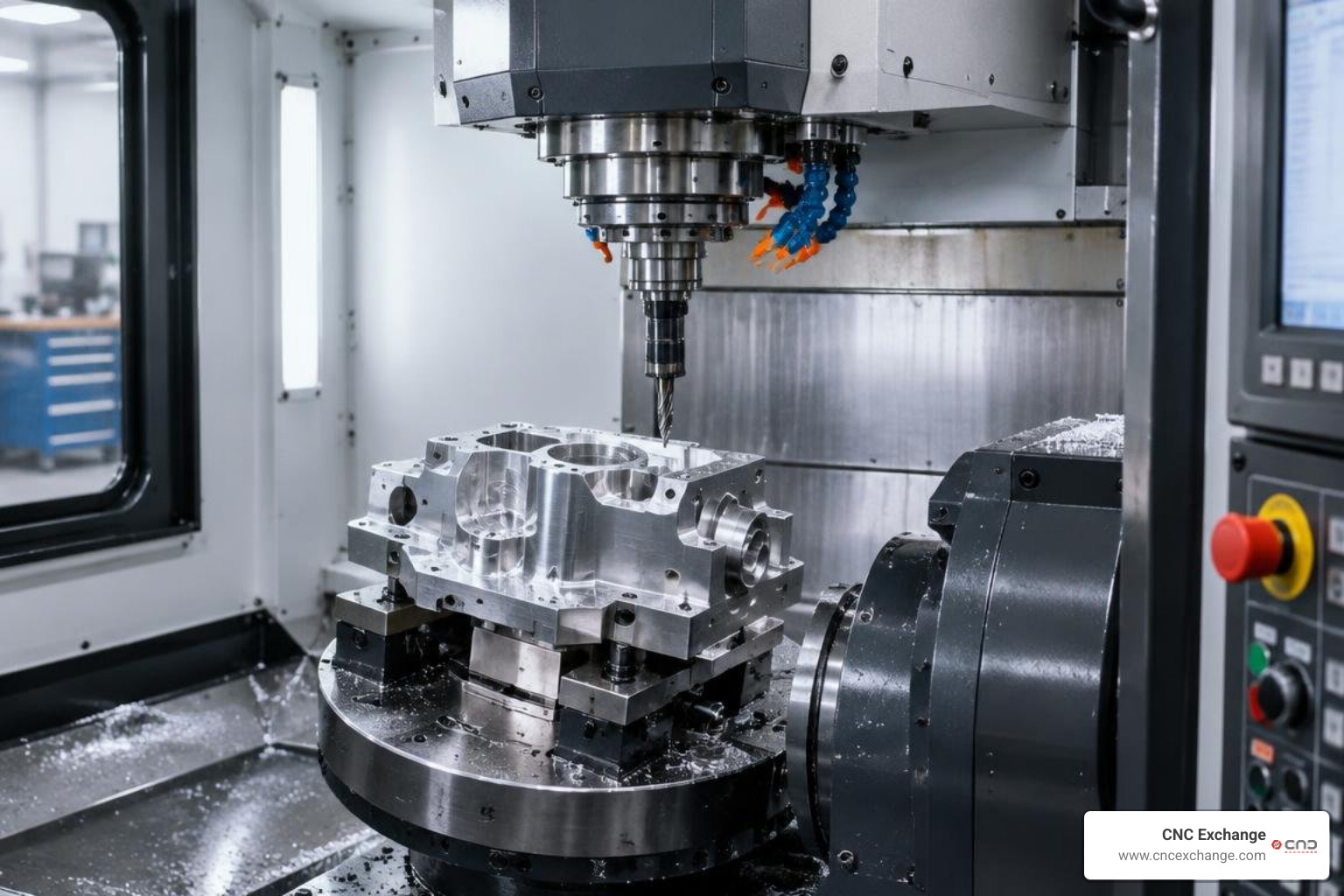
To produce complex turbine blades, engine housings, and structural brackets without cumulative tolerance errors, shops utilize high-precision 5-Axis Machining Centers. For intricate tooling, narrow slots, and hardened conductive alloys where conventional cutting tools experience rapid tool wear, shops turn to wire and sinker EDM technology. These systems allow fabricators to cut intricate contours regardless of material hardness while holding tolerances as fine as ±0.0001 inches.
Heavy Machinery, Automotive, and Medical Device Applications
Illinois has long been an epicenter for agricultural implements, construction equipment, automotive powertrain development, and medical device manufacturing. These diverse sectors require machine shops to balance heavy-duty material removal with miniature precision.
For heavy equipment, massive engine blocks, transmission cases, and complex hydraulic valve bodies, shops rely on rigid Horizontal Machining Centers equipped with multi-pallet changers and flexible machining systems. These horizontal platforms allow operators to load workpieces on secondary pallets during active cutting cycles, maximizing spindle utilization.
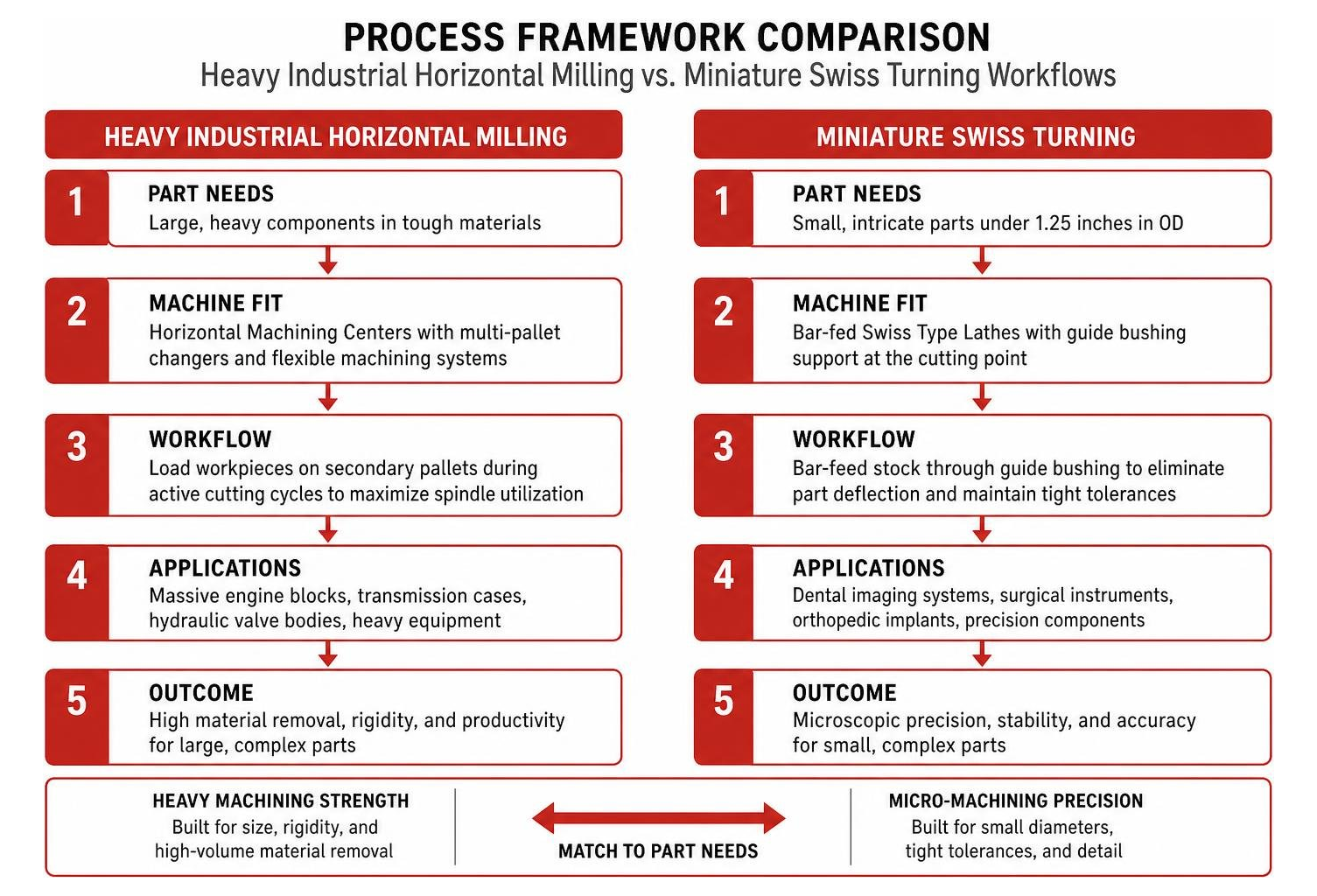
Conversely, dental imaging systems, surgical instruments, and orthopedic implants demand microscopic precision. In these sectors, operators deploy bar-fed Swiss Type Lathes. Swiss turning supports cylindrical stock right at the guide bushing, eliminating part deflection when turning intricate parts under 1.25 inches in outer diameter.
Core Capabilities and Equipment Profiles in Illinois Machine Shops
Modern Illinois contract manufacturers and job shops maintain versatile equipment configurations that accommodate both single-part prototype runs and high-volume continuous production. By selecting the right machine layout, shops lower their setup times, reduce scrap rates, and maintain fast delivery schedules.
| Machine Category | Primary Illinois Industrial Applications | Key Workpiece Specifications / Tolerances | Ideal Production Volume |
|---|---|---|---|
| Vertical Machining Centers (VMCs) | Prismatic parts, bracketry, secondary hole drilling, housings | Travels up to 50" x 24"; spindle speeds to 24,000 RPM; ±0.0002" | 1 to 5,000+ parts |
| Horizontal Machining Centers (HMCs) | Heavy engine components, hydraulic manifolds, large weldments | 400mm to 630mm+ pallets; 4-axis indexing tombstone setups | 500 to 50,000+ parts |
| 5-Axis Machining Centers | Impellers, aerospace turbine blades, complex medical implants | Simultaneous 5-axis continuous contouring; ±0.0001" | 1 to 2,500 parts |
| Swiss-Type CNC Lathes | Fasteners, bone screws, hydraulic spool valves, electrical pins | Bar capacities up to 1.25" OD; live tooling; ±0.0001" | 1,000 to 100,000+ parts |
| Wire & Sinker EDM | Extrusion dies, punch tooling, delicate micro-apertures | Hardened tool steels, tungsten carbide; ±0.0001" | 1 to 500 parts |
| Industrial Laser & Waterjet Cutters | Structural plates, sheet metal brackets, thick blanks | Sheet sizes to 5' x 10'; cutting thickness up to 6" | 10 to 10,000 parts |
Technical Capabilities of CNC Machines in Illinois Shops
The range of CNC equipment operating across Illinois gives manufacturers the flexibility to complete multi-step fabrication under one roof. Shops routinely combine high-speed milling, turning, cutting, and grinding processes to turn raw billets into finished assemblies:
- Milling and Prismatic Machining: Versatile 3-axis and 4-axis Vertical Machining Centers handle general face milling, pocketing, and drilling, offering spindle speeds up to 24,000 RPM for fine surface finishes in aluminum and engineering plastics.
- Turn-Mill and Lathe Production: Heavy-duty CNC Lathes equipped with live tooling, sub-spindles, and multi-axis turrets turn complex shafts, pulleys, and fittings while completing cross-holes and flats in a single setup.
- Precision Surface Preparation: Specialized surface, ID, OD, and centerless Grinders bring hardened cylindrical shafts, bearing journals, and machine ways to precise final dimensions with mirror surface finishes.
- Sheet and Heavy Plate Processing: Fast industrial Laser Cutters slice clean profiles through carbon and stainless steel sheet metal, while high-tonnage Waterjet Cutters cut thick tool steels, composites, and heat-sensitive alloys without creating a heat-affected zone.
Materials, Tooling, and Quality Metrology Standards
Illinois machine shops process a wide spectrum of materials, ranging from common aluminum alloys (6061, 7075) and structural carbon steels to 300/400-series stainless steels, brass, and bronze. For critical environments, facilities cut heat-resistant superalloys like Inconel 718 and grade 5 titanium, as well as engineering plastics including PEEK, Delrin (acetal), PTFE, and nylon.
Holding tolerances between ±0.0005 inches and ±0.0001 inches requires consistent process verification. Illinois facilities utilize temperature-controlled quality control labs equipped with bridge and gantry CMM inspection systems, optical vision comparators, surface profilometers, and calibrated thread plug gages.
To expand setup versatility on three-axis mills, shops often integrate bolt-on Rotary Tables. Adding a fourth or fifth positioning axis enables positional indexing that lets cutters reach multiple faces of a part in one clamping cycle.
Workforce Development, Automation, and Industry 4.0 Trends
The long-term competitiveness of Illinois machine shops depends on combining skilled labor with modern manufacturing automation. To address the need for qualified operators, technical institutions across the state provide focused machining curricula. For example, the CNC Machine Operator program at Illinois Central College offers a 6-month, 12-credit-hour certificate pathway costing around $2,004 in base tuition. These programs help students earn industry-standard National Institute for Metalworking Skills (NIMS) credentials and step directly into roles where average annual operator salaries in areas like Peoria reach $45,177.
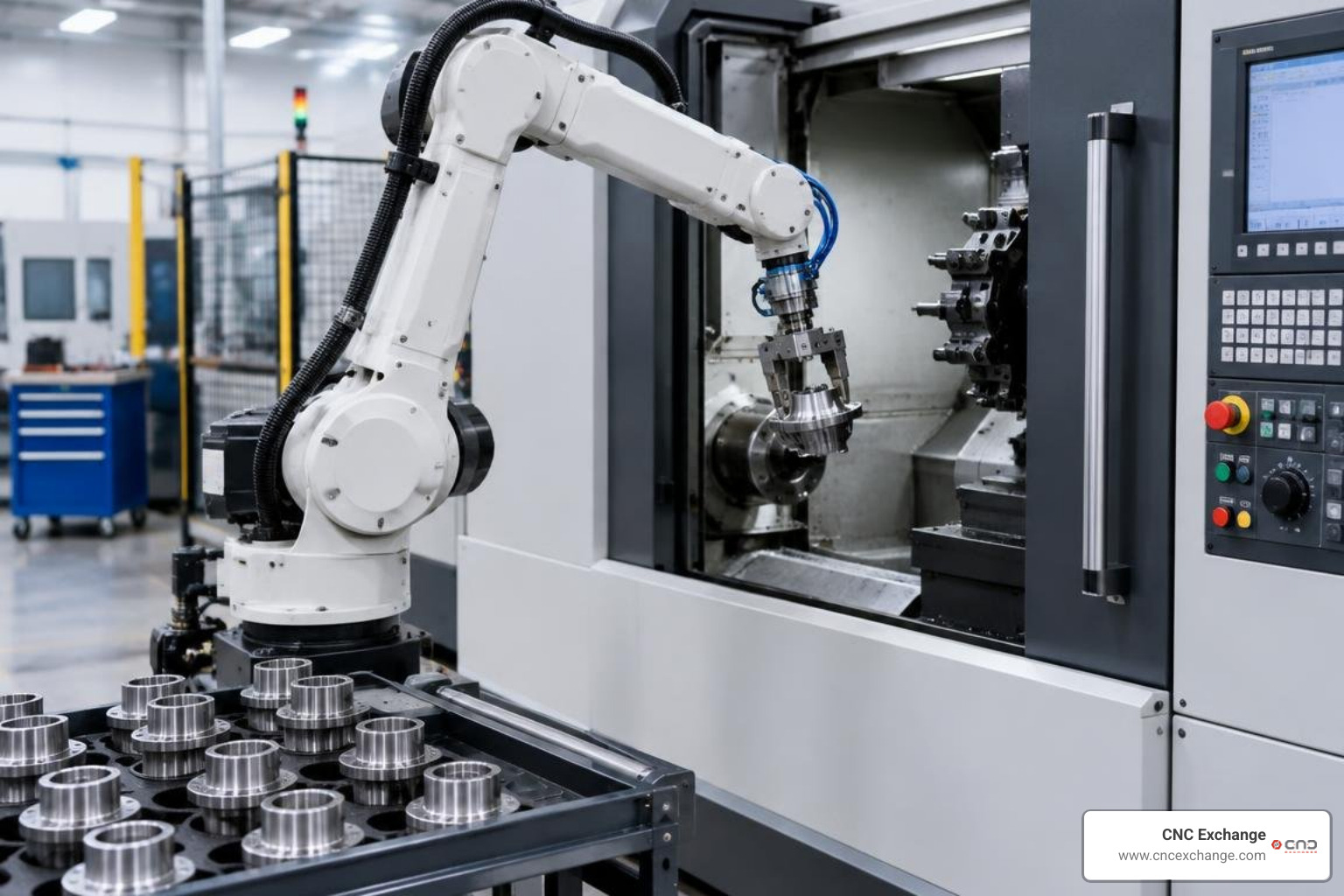
Alongside workforce education, shops across Illinois continue to adopt Industry 4.0 practices, predictive maintenance sensors, and automated part-handling systems. Automated material-handling Robots tend CNC mills and lathes to load raw billets and unload finished parts during unattended shifts.
For continuous turning, shops install hydrodynamic Bar Feeders that automatically index 12-foot bar stock into Swiss and turning centers, enabling extended lights-out manufacturing runs that keep unit costs low.
Prototyping vs. High-Volume Production Automation
A well-equipped Illinois machine shop typically organizes its workflow to support two distinct operational models:
- High-Mix, Low-Volume Prototyping: Ideal for engineering design validation, reverse engineering, and pre-production testing (runs of 1 to 50 parts). Experienced machinists review CAD models, perform Design for Manufacturability (DFM) reviews, and use versatile vertical mills and manual equipment to produce functional prototypes quickly.
- Automated High-Volume Production: Geared toward repeat orders of 5,000 to over 50,000 parts. Production engineering teams design dedicated hydraulic fixturing, balance cutting tool life, optimize CAM cycle paths, and deploy horizontal machining centers with pallet changers to maintain steady part output.
Frequently Asked Questions About CNC Machining in Illinois
What certifications should I look for when selecting an Illinois CNC machine shop?
The right certification depends on your end-use application. For general manufacturing and industrial equipment, look for an ISO 9001:2015 registered quality management system. For aerospace, aviation, and defense components, partner with shops holding AS9100D certification and ITAR (International Traffic in Arms Regulations) registration. If you require medical components or implants, verify compliance with ISO 13485 and applicable FDA quality standards.
What are the typical lead times for CNC manufacturing orders in Illinois?
Standard lead times for low-to-medium production runs (50 to 5,000 parts) typically range from 4 to 6 weeks, allowing sufficient time for material procurement, tooling setup, machining, secondary surface treatment, and quality inspection. Rapid prototyping and emergency replacement parts can often be delivered in 3 to 10 business days when standard raw stock is on hand. High-volume custom orders requiring specialized tooling or castings generally run on a 5 to 8 week schedule.
How does Illinois' logistics infrastructure benefit manufacturing supply chains?
Illinois sits at the intersection of major continental shipping corridors. Operating through the massive rail switching hubs in Chicago, proximity to O'Hare air cargo facilities, the inland waterways of the Illinois and Mississippi Rivers, and interstate arteries (I-80, I-55, I-90, I-57), regional machine shops can ship freight to over half the US population within a single business day. This central hub reduces transit costs, avoids coastal port backlogs, and keeps supply chains running smoothly.
Conclusion
Illinois remains an industrial powerhouse, driven by a reliable manufacturing infrastructure, skilled machinists, and an active community of precision machine shops. Whether machining heavy construction components in Central Illinois or cutting miniature medical hardware in the Chicago suburbs, having the right CNC equipment on your floor determines your shop's productivity and profitability.
When your shop is ready to expand capacity, clear out floor space, or modernize machinery, we are here to help. At CNC Exchange, our Prospect Heights, Illinois team provides an accessible marketplace to auction, buy, and sell reliable used and refurbished industrial machinery. We help machine shops across the Midwest find the right equipment for their production needs while realizing fair market value on every machine transaction.