
Choosing Among Horizontal Boring Mill Manufacturers in 2026
Start with the size and weight of your parts. TOS VARNSDORF, PAMA, FERMAT, and LAZZATI are worth comparing for large, heavy workpieces. JTEKT, Niigata, and DMG MORI offer options for shops that also need precise boring and multi-sided machining. The best choice is the machine that fits your parts, tolerances, budget, and local service needs.
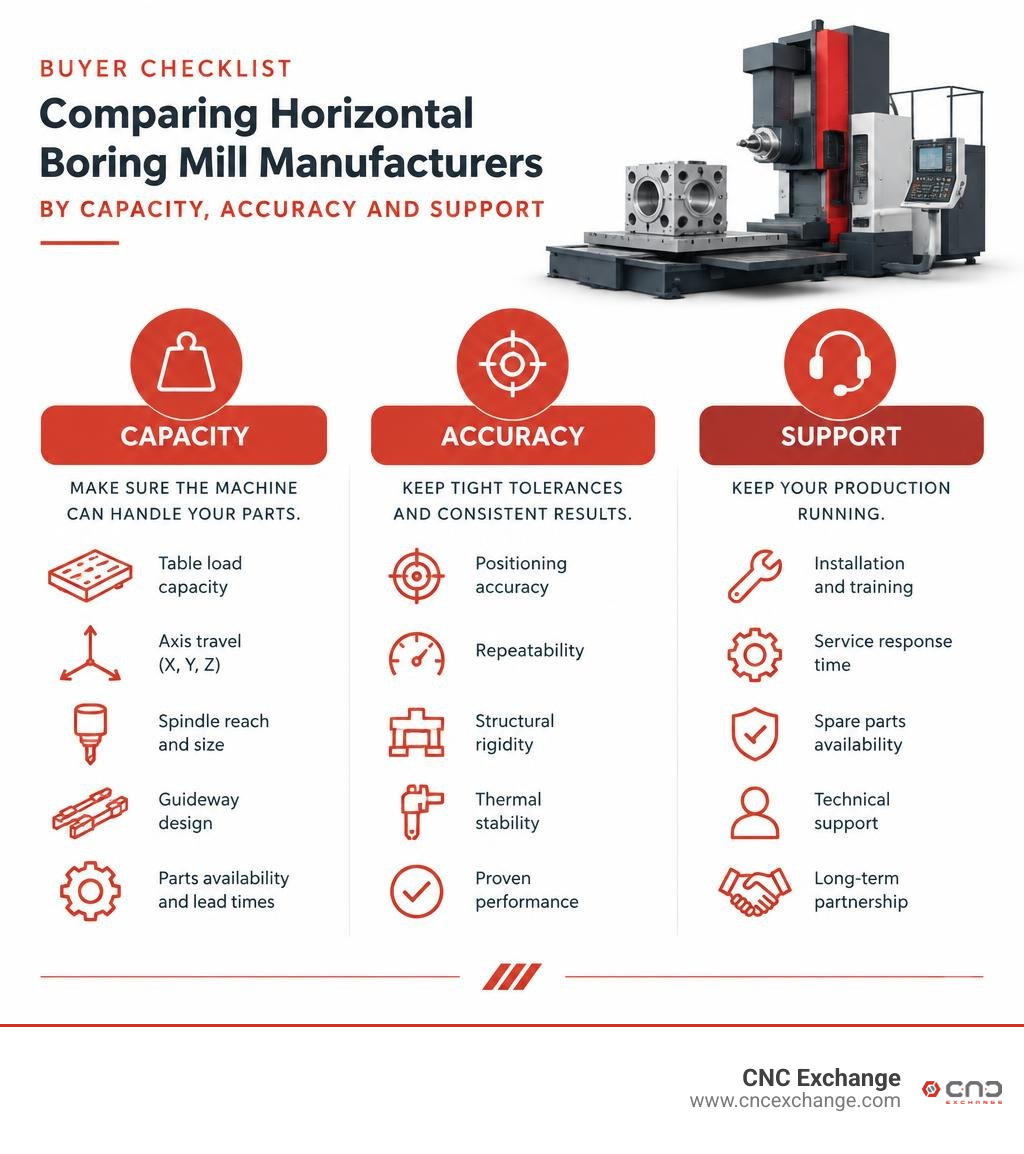
Before requesting quotes, check table load, axis travel, spindle reach, guideway design, and parts availability. A lower purchase price may not save money if the machine cannot hold accuracy or sits idle waiting for repairs.
I'm Jared Gray, and I've spent more than 12 years buying, selling, and brokering CNC equipment. I'll use that experience to help you compare horizontal boring mill manufacturers and find a machine that makes sense for your shop.
Overview of Top Horizontal Boring Mill Manufacturers in 2026
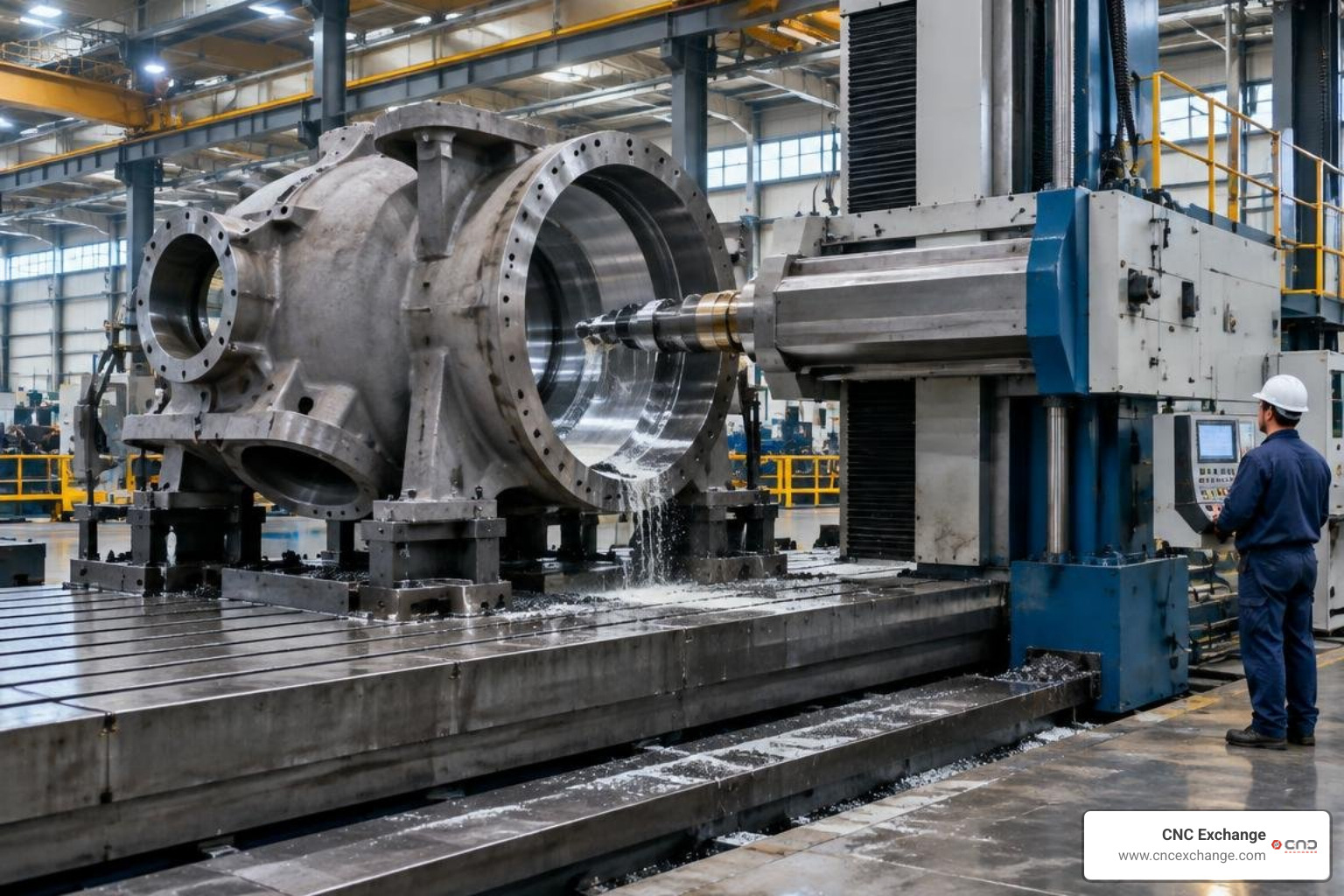
Selecting the right machine tool builder requires balancing mechanical heritage, structural design, and digital integration. Heavy industrial sectors—ranging from aerospace structural frames and defense platforms to power-generation turbine casings and mining excavators—rely on these massive workhorses for single-setup multi-face cutting.
When you evaluate the extensive range of horizontal boring mills currently available on the market, you will find distinct engineering approaches between European, Asian, and traditional American builders.
| Manufacturer | Country / Region | Founded | Core Guideway Architecture | Primary Weight & Size Class | Distinctive Technical Specialty |
|---|---|---|---|---|---|
| LAZZATI | Italy | 1939 | Full Hydrostatic (LHS System) | 15 tons to >100 tons (up to 40m length) | Complete hydrostatic oil-film design on all linear axes; integrated thermal management |
| PAMA | Italy | 1926 | Hydrostatic & Linear Roller | 10 tons to >150 tons | High-torque boring quills, large floor-type boring mills, energy equipment focus |
| TOS VARNSDORF | Czech Republic | 1903 | Boxway, Roller, & Hydrostatic | Up to 200 tonnes (WRD Series) | Century-long mechanical heritage, ultra-heavy ram/quill travel, extreme versatility |
| ŠMT (Skoda) | Czech Republic | 1911 | Hydrostatic Guideways | Workpieces >200 tons; tables to 16m | Ultra-heavy vertical and horizontal floor-type systems for ship propulsion and power |
| FERMAT | Czech Republic | 1990 | Hardened Boxways & Roller | 5 to 40 tons (Modular series) | Rapid modular assembly, cross-continent supply network, flexible CNC configurations |
| FPT Industrie | Italy | 1969 | Roller Guideways & Hydrostatic | Medium to heavy (10 to 80+ tons) | Patented dynamic geometric compensation, high-speed universal milling heads |
| JTEKT Machinery | Japan | 1941 | Cylindrical Roller & Hydrostatic Table | 5,000 kg to 20,018 kg (HB Series) | Hydrostatic B-axis rotary tables, Meehanite® cast structures, heavy-duty quill power |
| Niigata Machine Techno | Japan | 1895 | Hybrid: Roller (X/Z) + Boxway (Y) | 8,000 kg to 10,000 kg pallet mass | Heavy internal boring BAR spindle (130 mm), double-column thermal symmetry |
| DMG MORI | Germany / Japan | 1870 | Pretensioned Roller / Square Slideway | 15,000 kg to 25,000 kg table capacity | CELOS X digital platform, energy-saving high-efficiency W-axis stroke designs |
| CNC Yangsen | China | 2007 | High-Rigidity Roller & Boxway | 5 to 30 tons | In-house integrated casting and machining, aggressive total capital cost efficiency |
| Lucas Precision | USA | 1900 | Precision Boxway & Roller | 5 to 50 tons | Classic American structural rigidity, table-type retrofits, heavy custom rebuilding |
European Horizontal Boring Mill Manufacturers and Heavyweight Specialists
European builders dominate the ultra-heavy and hydrostatic segments of the market. For facilities handling components from 20 tons to well over 200 tons, European engineering sets the standard for structural rigidity, thermal stabilization, and extended machine lifespan.
- LAZZATI (Italy): LAZZATI's flagship Evo4.0 product line stands out by utilizing full hydrostatic architecture across all linear axes through its proprietary LHS system. By eliminating mechanical surface contact entirely, these machines eliminate stick-slip phenomena and mechanical guideway wear, accommodating components extending past 40 meters in length.
- TOS VARNSDORF (Czech Republic): With over 120 years of machine tool manufacturing history, TOS VARNSDORF engineers machines built for extreme operating conditions. Their massive WRD 160/180/200 H floor-type machines comfortably handle 200-tonne workpieces, making them a staple in heavy power generation, locomotive, and mining equipment manufacturing.
- ŠMT / Skoda Machine Tool (Czech Republic): Skoda specializes in massive vertical and horizontal boring platforms. Capable of carrying workpieces exceeding 200 tons on rotary tables with diameters up to 16 meters, their machines are engineered for maritime crankshafts, nuclear pressure vessels, and giant hydro-turbine housings.
- PAMA (Italy): Celebrating nearly a century of heavy equipment innovation, PAMA designs floor-type and table-type mills featuring heavy-duty hydrostatic quills and dynamic head-changing systems tailored for oilfield gate valves and defense machining.
- FERMAT Machinery (Czech Republic): Fermat produces over 100 CNC machines annually, employing a modular construction methodology. Their designs allow shops to tailor X, Y, Z, and W strokes to exact customer specifications with minimal lead times.
- FPT Industrie & UnionChemnitz (WaldrichSiegen): FPT Industrie provides high-precision moving-column machines equipped with continuous multi-axis universal heads. In Germany, UnionChemnitz (established under the WaldrichSiegen umbrella with roots dating back to 1840) delivers massive boring mills optimized for heavy industrial tolerances.
Global and Asian Horizontal Boring Mill Manufacturers for High-Precision Machining
Asian and global manufacturing groups have expanded high-performance horizontal boring capacity by combining rapid tool-changing ergonomics, advanced digital interfaces, and hybrid guideway configurations.
- JTEKT Machinery (Japan): The JTEKT HB Series incorporates a solid Meehanite® one-piece cast base alongside a high-load B-axis rotary table supported by an advanced hydrostatic bearing system. The HB Series supports workpieces weighing up to 20,018 kg (44,092 lbs), utilizing high-speed quills reaching up to 3,500 rpm.
- Niigata Machine Techno (Japan): Niigata's HN-S BAR platform bridges the gap between horizontal machining centers and horizontal boring mills. Their HN1000-S BAR, HN1250-S BAR, and HN1600-S BAR configurations feature a 130 mm diameter BAR spindle with a 555 mm stroke, handling workpiece swings up to φ3,200 mm × 3,000 mm on pallets holding up to 10,000 kg.
- DMG MORI (Germany/Japan): The DMG MORI PBT 130 horizontal boring center incorporates high-rigidity square slideways and large-diameter pretensioned ballscrews. With a 15,000 kg table payload, 4,000 rpm spindle speeds, and the CELOS X cloud interface, it delivers real-time process monitoring and standardized operational ergonomics.
- CNC Yangsen & DMTG (China): CNC Yangsen operates vertically integrated manufacturing facilities in Xiamen, managing its own heavy casting, heat treatment, and precision surface machining. This structure delivers heavy-duty capabilities at an attractive total capital investment point. DMTG (Genertec Dalian Machine Tool), with history dating to 1935, offers competitive, robust boxway horizontal boring platforms for heavy general manufacturing.
Critical Machine Architecture: Hydrostatic vs. Linear Roller Guideways
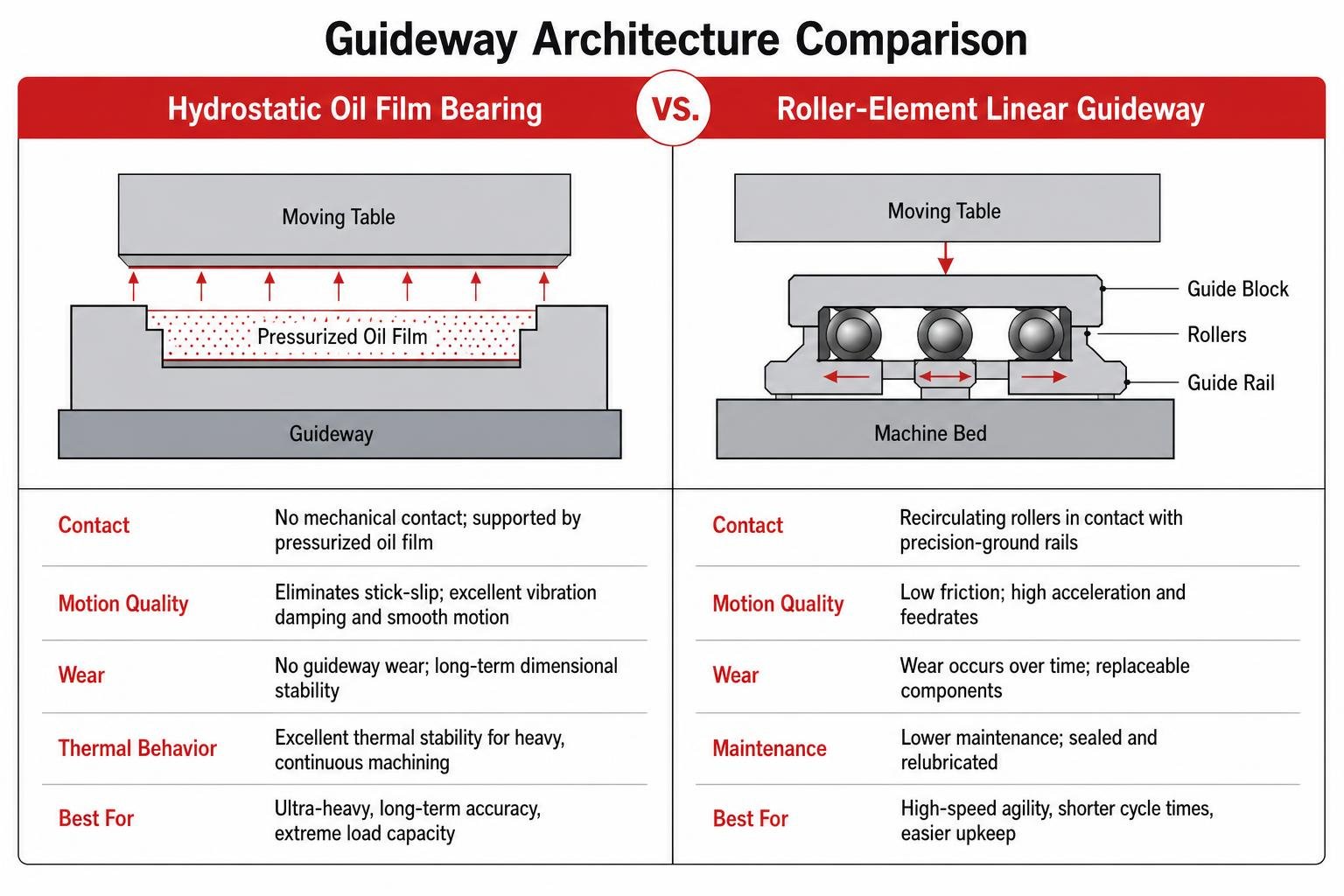
When investing in a horizontal boring mill intended to stay in service for 20 to 30 years, selecting the proper guideway architecture is critical. The design of your linear guide system directly dictates vibration dampening, surface finish quality, tool wear, and machine longevity.
Linear Roller Guideways: Agility and Low Maintenance
Linear roller guideways rely on recirculating cylindrical steel or ceramic rollers running along precision-ground rails.
- High Acceleration and Feedrates: Roller guides deliver rapid traverse rates up to 15–25 m/min with low friction coefficients.
- Simplified Maintenance: These systems use standardized lubrication blocks, reducing fluid management complexity.
- Cost Efficiency: Machines with roller guideways cost less upfront and provide easy rail and carriage replacement during field overhauls.
Drawback: Under extreme, continuous interrupted cuts in forged alloy steel, the micro-elastic deformation of rolling elements can transmit chatter vibrations directly into the machine column and cutting tool.
Hydrostatic Guideways: Infinite Fatigue Life and Dynamic Damping
Hydrostatic architecture eliminates all mechanical metal-to-metal contact. The moving structural elements (such as columns, headstocks, and tables) ride entirely on a pressurized, micron-thin film of temperature-controlled hydraulic oil.
- Zero Mechanical Wear: Because the moving components never contact the bed, hydrostatic guideways exhibit zero friction wear over decades of operation.
- Superior Vibration Absorption: The hydraulic oil layer acts as a shock absorber, increasing dynamic stiffness and cutting tool life during heavy roughing passes.
- Elimination of Stick-Slip: Micro-positioning accuracy remains consistent even when moving 50-ton loads, as static friction equals dynamic friction.
For facilities undertaking heavy-duty floor type boring mill capabilities, full hydrostatic support on the X and Y axes prevents mechanical sag and maintains straightness tolerances over travel lengths exceeding 10 meters.
Horizontal Boring Mills vs. Horizontal Machining Centers (HMCs)
Shops frequently evaluate whether a high-capacity Horizontal Machining Center (HMC) or a dedicated Horizontal Boring Mill (HBM) best serves their production profile. While modern CNC technology has blurred some boundaries, the core mechanical differences remain clear.
The W-Axis Quill Spindle Advantage
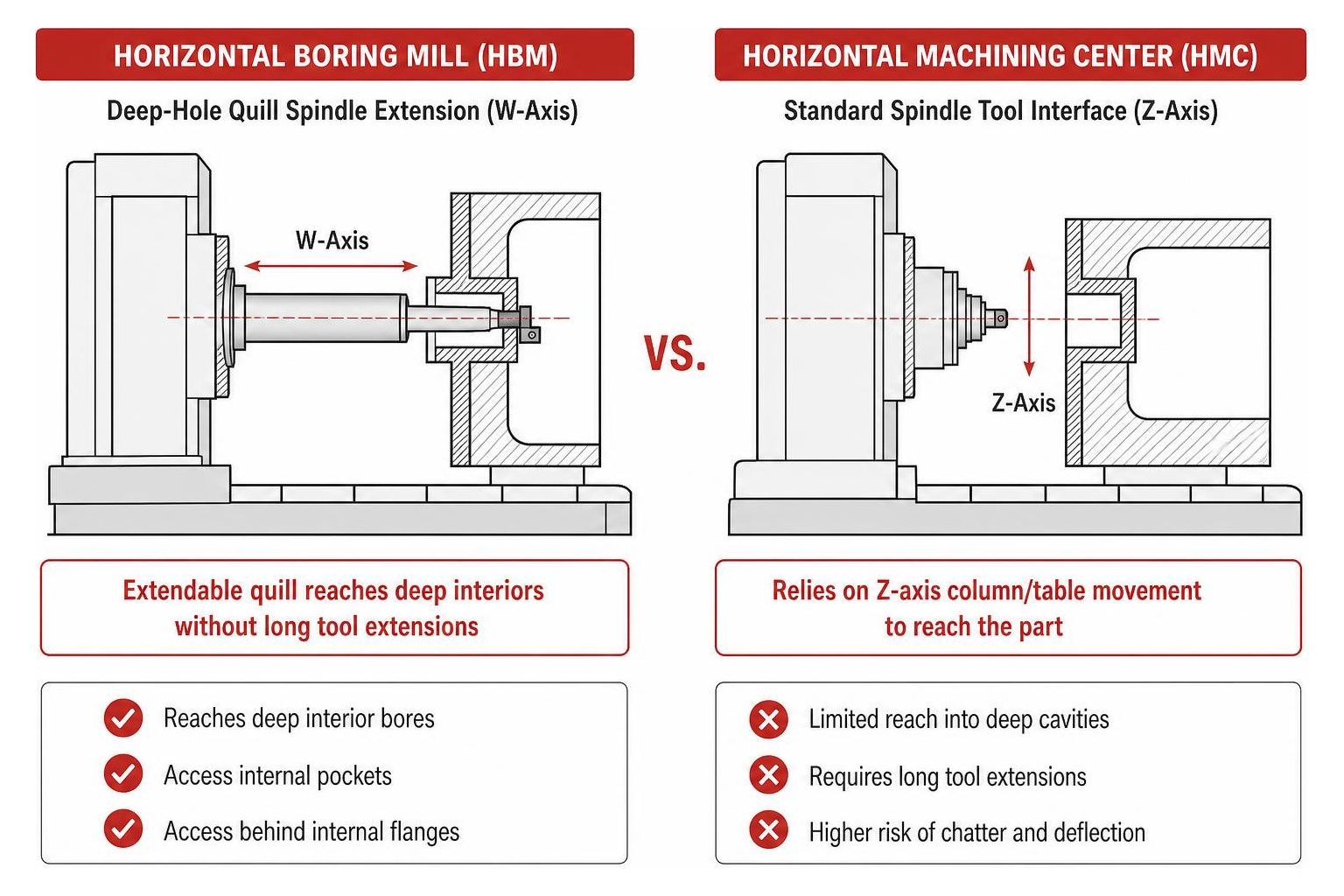
The defining mechanical feature of a traditional horizontal boring mill is the extendable quill spindle (the W-axis). While an HMC relies entirely on Z-axis column or table movement to bring the cutter to the part, a boring mill extends a hardened, large-diameter steel bar (typically 110 mm to 200 mm in diameter) directly out of the headstock.
- Reaching Deep Cavities: The W-axis quill reaches into deep interior bores, internal pockets, and behind internal flanges without requiring long, chatter-prone tool extensions.
- Facing Heads and Special Tooling: Heavy-duty boring mills support mechanically driven programmable facing heads (U-axis) to perform single-point taper turning, internal contouring, and large-diameter flange facing in a single setup.
- Rigidity Under Deflection: With massive headstock castings and hydraulic clamping systems, the boring quill supports deep boring operations that would stall a standard 50-taper HMC spindle.
If your facility processes massive structural weldments, large engine crankcases, or valve bodies requiring deep internal geometry, upgrading shop capabilities with a new horizontal boring mill provides the reach and stability that standard machining centers cannot match.
Key Evaluation Criteria When Choosing a Manufacturer
Selecting a machine tool builder requires evaluating engineering rigor, structural dynamics, and the builder's long-term field support.
Spindle Torque and Quill Diameter
Heavy boring cuts in tough alloys require immense low-end torque rather than high spindle RPMs. Verify that the builder incorporates multi-speed mechanical gearboxes (such as ZF gearboxes) or high-torque built-in liquid-cooled motors. A 130 mm or 150 mm spindle should deliver between 1,500 Nm and 3,500+ Nm of continuous cutting torque to handle heavy milling cutters and large boring bars.
Table Load Limits and Rotary Indexing
Examine the physical connection between the rotary B-axis and the machine bed. For parts weighing over 10 tons, look for rotary tables supported by high-capacity hydrostatic bearings or oversize crossed-roller bearings with backlash-free dual-pinion drive motors. Ensure the table clamp mechanism uses hydraulic disc brakes capable of resisting deflection under aggressive roughing.
Thermal Symmetry and Environmental Compensation
Large machine structures expand and contract with shop ambient temperature swings. Leading manufacturers utilize symmetrical double-column castings, internal cooling circuits running through the headstock housing, and active ballscrew core cooling. Real-time temperature sensors integrated across the column, ram, and bed should feed dynamic compensation algorithms in the CNC control to prevent tool position drift.
Industry 4.0 Integration and Predictive Maintenance
Modern CNC horizontal boring systems now incorporate comprehensive sensor arrays that track bearing vibration, hydraulic pressure fluctuations, and linear scale thermal growth. Builders like DMG MORI (CELOS X), LAZZATI (Levo system), and PAMA integrate remote diagnostic telemetry that flags spindle bearing fatigue or lubrication pressure drops before an unexpected stoppage occurs.
OEM Continuity and Spare Parts Availability
A horizontal boring mill represents an investment that will run for decades. Prioritize manufacturers that maintain dedicated regional service centers, stocked replacement parts hubs, and a clear commitment to supporting controls and mechanical components 20 years down the road. If you manage large scale heavy-duty boring operations, access to prompt technical support is just as vital as machine specifications.
Frequently Asked Questions About Horizontal Boring Mills
What is the main difference between table-type and floor-type boring mills?
Table-type boring mills place the workpiece on a multi-axis coordinate table that moves in the X and Z directions while the spindle column remains stationary (or moves along a single axis). These machines are ideal for compact to medium-heavy parts (typically up to 10 to 25 tons).
Floor-type boring mills mount the workpiece to a stationary floor plate or an independent rotary table, while the entire vertical column travels along an extended X-axis bed. Floor-type systems are built for long, heavy components (ranging from 20 tons to well over 200 tons) because the workpiece weight does not restrict machine axis acceleration.
How does W-axis quill travel improve energy efficiency and precision?
When performing deep drilling or tapping cycles, extending a lightweight, rigid quill (the W-axis) moves significantly less physical mass than driving an entire 15-ton vertical column or headstock assembly forward (the Z-axis). This reduction in moved mass can lower axis drive energy consumption by up to 50% during deep-hole operations.
Furthermore, extending the quill directly toward the workpiece allows the use of shorter, more rigid toolholders, which minimizes tool deflection and chatter.
Why is hydrostatic guideway architecture favored for ultra-heavy workpieces?
When handling massive workpieces, conventional rolling elements experience high localized contact stresses (Hertzian contact stress) that can accelerate rail brinelling and shorten operational life.
Hydrostatic systems distribute the load evenly across a wide fluid area, completely eliminating metal-to-metal contact. This eliminates stick-slip, delivers superior vibration damping during interrupted cuts, and ensures the machine maintains geometric alignment and accuracy over decades of heavy service.
Conclusion and Next Steps for Machine Procurement
Investing in a horizontal boring mill is a major decision that impacts your facility's production capabilities, operational throughput, and long-term profitability. Whether your operations require a fast table-type boring platform from builders like JTEKT, Niigata, and Fermat, or an ultra-heavy floor-type hydrostatic system from LAZZATI, TOS VARNSDORF, or Skoda, matching structural architecture to your shop's component portfolio is the key to maximizing ROI.
At CNC Exchange, based out of our Prospect Heights, Illinois facility, we assist machine shops and industrial manufacturers across North America in navigating equipment acquisitions, liquidations, and trade-ins. If you are preparing to balance capital budgets with production capacity, our team can help you evaluate technical specifications, verify machine condition, and find available horizontal boring mills to modernize your machining operations today.